Savari Sadhan Puja (Vahan Puja): Spiritual Blessing of Vehicles
2026-02-16
18.9 min read
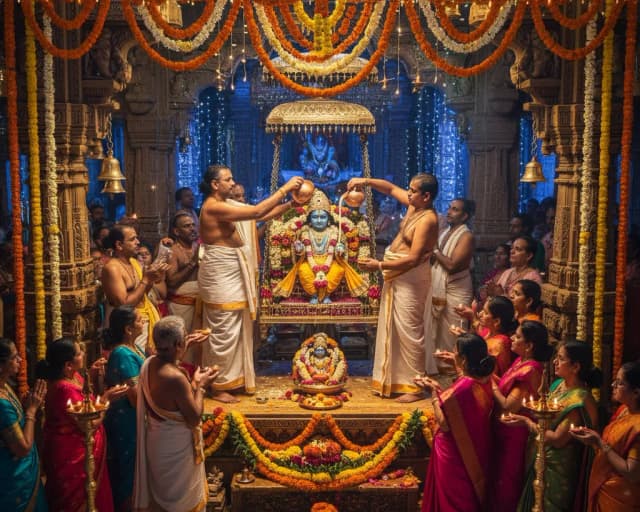
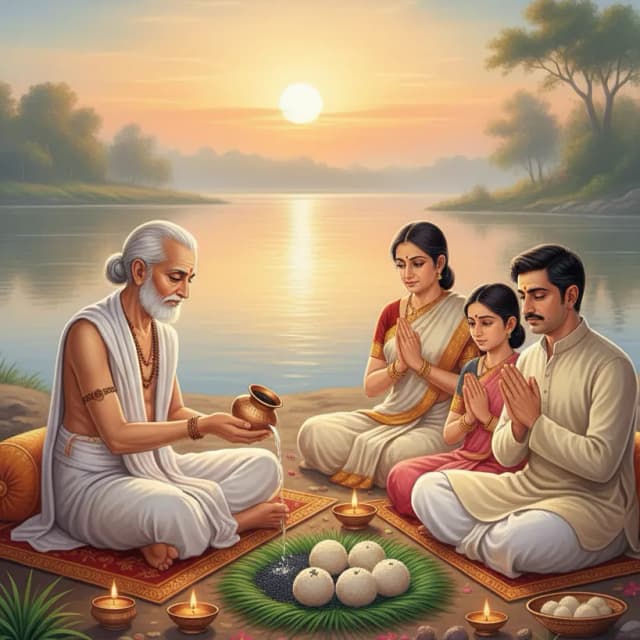
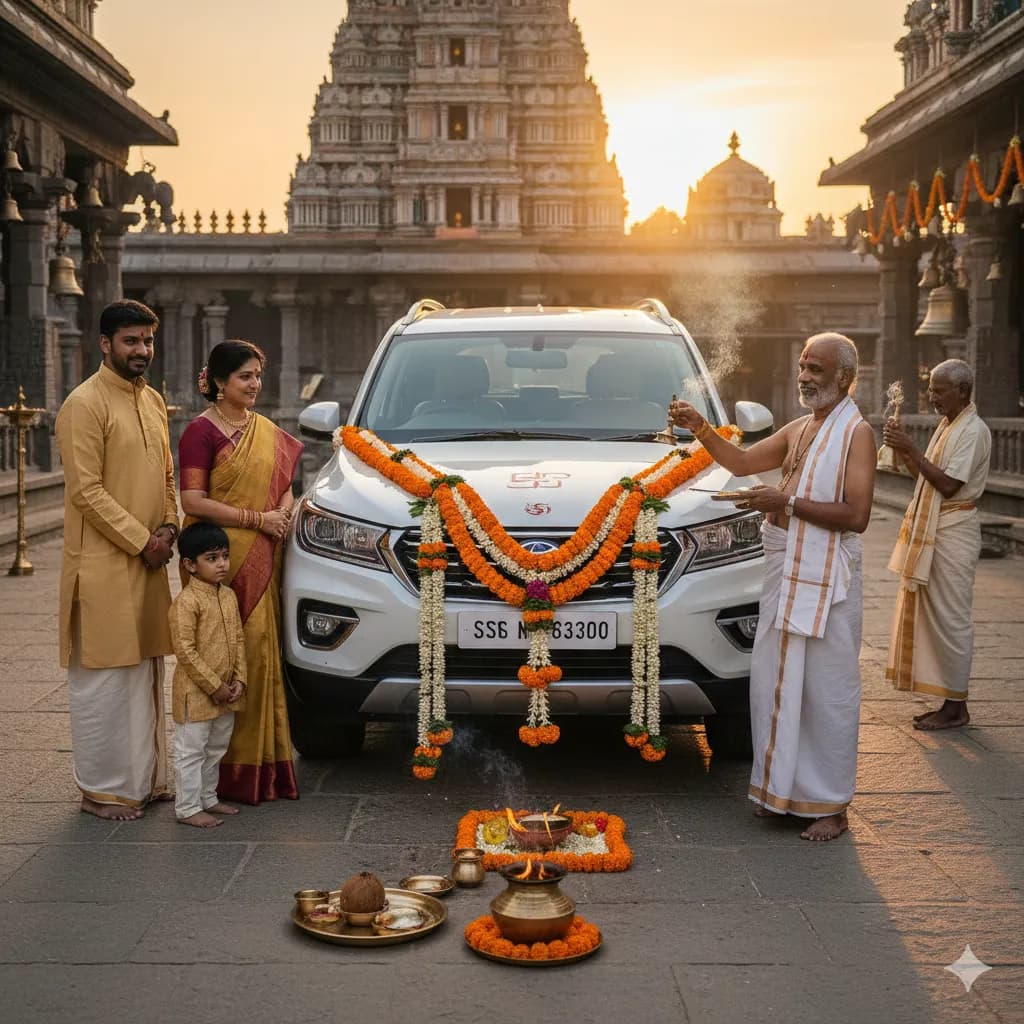
Savari Sadhan Puja (सवारी साधन पूजा), commonly known as Vahan Puja (वाहन पूजा) or Vehicle Puja, is the sacred ritual blessing and consecration of motor vehicles (cars, motorcycles, trucks, buses, scooters, and other automobiles) according to Hindu spiritual tradition. The term encompasses:
-
Savari (सवारी) = Ride, mount, vehicle
-
Sadhan (साधन) = Means, instrument, tool
-
Puja (पूजा) = Worship, ritual reverence
Vahan (वाहन) literally means "that which carries" or "vehicle," representing any mode of transport.
This sacred ritual transforms an ordinary mechanical vehicle into a spiritually blessed and protected means of transportation, infusing it with divine blessings and positive energy for safe, successful, and auspicious journeys.
Purpose of Savari Sadhan Puja
Savari Sadhan Puja serves multiple interconnected spiritual and practical purposes:
Protection from Accidents and Hazards:
The primary purpose is to invoke divine protection against road accidents, mechanical failures, traffic mishaps, and unforeseen dangers. The ritual creates a protective spiritual shield around the vehicle and its occupants.
Cleansing and Purification:
Any vehicle, particularly a new one, may carry residual negative energy from manufacturing processes, transit, showroom environments, or past associations. The puja purifies the vehicle, removing such negative vibrations and creating a clean energetic foundation.
Invoking Divine Blessings:
The ritual formally invokes the blessings of:
-
Lord Ganesha (remover of obstacles, patron of new beginnings)
-
Lord Vishwakarma (divine architect, protector of craftsmanship and machinery)
-
Lord Hanuman (protector during journeys, guardian of safe travel)
-
The Sun (source of illumination, guider of the path forward)
-
Other deities, depending on tradition (Durga for protection, Lakshmi for prosperity)
Gratitude Expression:
The puja expresses sincere gratitude to the Divine for the prosperity and good fortune that enabled the purchase of a vehicle. In Hindu philosophy, all possessions are ultimately Divine gifts deserving acknowledgment and gratitude.
Safe and Auspicious Journey Assurance:
By consecrating the vehicle to Divine care, the owner mentally and spiritually transfers the responsibility of safe travel to the Divine, creating psychological peace and confidence while driving.
Longevity and Maintenance Blessing:
The puja invokes blessings for the vehicle's long life, proper functioning, minimal mechanical problems, and sustained value, essentially blessing the vehicle to serve its purpose faithfully.
Energy Harmonization:
The ritual harmonizes the vehicle's material energy with divine and cosmic principles, aligning it with beneficial energies and distancing it from harmful vibrations.
Scriptural and Mythological Foundation
Vedic References:
While direct references to vehicles as we know them don't appear in ancient Vedas (as automobiles are modern), the Vedas establish the principle that all crafted objects and instruments deserve blessing and reverence. The Rigveda contains hymns to Tvashtri (the cosmic craftsman) and invocations for protection during journeys.
Puranic Tradition:
The Puranas extensively describe:
-
Lord Vishwakarma (the divine architect and engineer) is the creator and sustainer of all crafted things, making him the natural deity for vehicle worship
-
Lord Hanuman's role as the ultimate traveler and protector during Rama's journeys establishes him as the guardian of safe travel
-
Lord Ganesha's role as the remover of obstacles on any path, whether physical or spiritual
Ramayana and Mahabharata References:
Both epics contain extensive descriptions of sacred chariots and vehicles receiving blessings and special preparation before important journeys, establishing an ancient precedent for vehicle worship.
Vishwakarma Jayanti:
The most significant scriptural connection comes through Vishwakarma Jayanti (the birthday of Lord Vishwakarma, typically September 17 according to the Hindu calendar). On this day, artisans, engineers, craftspeople, and machinery owners traditionally worship their tools, equipment, and vehicles, directly acknowledging vehicles as worthy of ritual blessing.
Modern Adaptation of Ancient Principles:
Vehicle Puja represents a modern adaptation of ancient principles where any important new possession or instrument receives formal blessing and purification. Just as a sword receives blessing before battle or a new tool is sanctified before use, vehicles receive similar consecration in contemporary Hindu practice.
Deities Associated with Vehicle Worship
Understanding the specific deities worshipped in Savari Sadhan Puja clarifies the ritual's spiritual dimensions:
LORD GANESHA (गणेश)
Primary Role in Vehicle Puja:
Ganesha is the foremost deity worshipped in nearly all vehicle pujas, particularly in North India and among many diaspora communities.
Why Ganesha?
-
Vighnaharta (Remover of Obstacles): Ganesha specifically removes obstacles from paths and journeys
-
Lord of New Beginnings: Vehicle ownership is a new beginning deserving his blessing
-
Protector: Known to protect devotees during travel and transitions
-
Remover of Hindrances: Ensures the vehicle doesn't face mechanical or accidental problems
Prayer: "O Lord Ganesha, remover of all obstacles, I bow before you. Bless this vehicle with your protective grace. Remove all hindrances from its path. Grant safe, smooth, and auspicious journeys to all who travel in this vehicle. May it be forever free from accidents, mechanical failures, and all forms of danger."
LORD VISHWAKARMA (विश्वकर्मा)
Primary Role in Vehicle Puja:
Vishwakarma is the divine architect, engineer, and craftsman who created the universe's infrastructure. He is worshipped particularly on Vishwakarma Jayanti (September 17).
Why Vishwakarma?
-
Divine Engineer: Vishwakarma is the creator and sustainer of all machines and crafted objects
-
Creator of Vehicles: According to mythology, Vishwakarma designed the divine chariots and celestial vehicles
-
Protector of Machinery: As the deity of craftsmanship, he ensures the proper functioning of manufactured items
-
Granter of Longevity: Invokes durability and long operational life for vehicles
Mantra for Vishwakarma:
"Om Vishwakarmane Namah"
Prayer: "O Lord Vishwakarma, divine architect and engineer, creator of all crafted things, I bow to your supreme wisdom. Bless this vehicle with your sacred craftsmanship. May it function perfectly and serve its purpose faithfully. Grant longevity, mechanical perfection, and divine protection to this instrument of transport."
LORD HANUMAN (हनुमान)
Primary Role in Vehicle Puja:
Hanuman is worshipped specifically for journey protection and safe travel, making him particularly relevant for vehicles used in long-distance or frequent travel.
Why Hanuman?
-
Lord of Journeys: Hanuman undertook the most epic journey in Hindu mythology
-
Ultimate Traveler: Represents supreme capability in long-distance travel and navigation
-
Protector: Known to provide immediate protection in times of danger
-
Overcomer of Obstacles: Famous for overcoming any obstacle in his path
-
Guardian of Devotees: Protects those who travel in his name
Mantra for Hanuman:
"Om Parth Dhwajagrasamvasine Namah"
Translation: This mantra invokes Hanuman's protection during journeys and removes negativity from travel.
Prayer: "O Lord Hanuman, supreme protector and ultimate traveler, I bow to your infinite courage and strength. Bless this vehicle and all who travel in it. Protect us from all accidents, dangers, and hindrances on the road. May we journey safely under your watchful care. Grant us your strength, courage, and protective grace."
SURYA (सूर्य) - THE SUN
Role in Vehicle Puja:
Surya represents illumination, clarity, and the guiding light that shows the path forward.
Why Surya?
-
Illumination Principle: Represents clarity of vision for safe driving
-
Guiding Light: Symbolizes the guidance needed to navigate roads safely
-
Giver of Energy: Provides vitality and alertness to vehicle occupants
-
Dispeller of Darkness: Removes confusion and uncertainty
Mantra for Surya:
"Om Suryaya Namah"
Prayer: "O Sun God, source of all light and energy, bless this vehicle with your illuminating grace. May the paths of all who travel in this vehicle be lit with your wisdom. Grant clarity of vision, alertness of mind, and safe navigation through all journeys."
DURGA/SHAKTI (दुर्गा/शक्ति)
Role in Vehicle Puja:
Durga represents protective power and the destruction of negative forces.
Why Durga?
-
Ultimate Protector: The Goddess is known for her protective shield against all dangers
-
Destroyer of Evil: Removes malevolent energies that might cause accidents
-
Supreme Power: Represents the highest protective force in the universe
-
Guardian of Devotees: Those who invoke her are protected absolutely
Prayer: "O Divine Mother Durga, supreme protective power, shield this vehicle with your infinite strength. Destroy all negative forces and dangers that may threaten those traveling in this vehicle. May your protective energy surround this automobile constantly, ensuring safe and blessed journeys."
LAKSHMI (लक्ष्मी) - WEALTH AND PROSPERITY
Role in Vehicle Puja:
Lakshmi is sometimes invoked for prosperity and the vehicle's longevity.
Why Lakshmi?
-
Sustainer: Sustains the vehicle's functioning and prevents costly repairs
-
Prosperity: Ensures the vehicle remains a source of prosperity and income (for commercial vehicles)
-
Abundance: Blesses with good fortune and successful travels
Prayer: "O Mother Lakshmi, goddess of prosperity and abundance, bless this vehicle with your grace. May it be a source of prosperity and success to its owner. Grant longevity, value preservation, and continuous safe service."
Types of Vehicle Puja
Vehicle blessings manifest in different forms depending on context and tradition:
1. NEW VEHICLE PUJA (First-Time Blessing)
Timing: Performed immediately after purchasing a new vehicle, ideally on an auspicious day before the first drive.
Significance: Marks the vehicle's transformation from a manufactured object to a spiritually blessed possession.
Complexity: Can range from simple (5-10 minutes at home) to elaborate (1 hour with a priest at the temple/home).
Primary Deities: Ganesha (primary), Vishwakarma (if on Vishwakarma Jayanti), Hanuman (if vehicle will be used for frequent travel).
2. VEHICLE OWNERSHIP RENEWAL PUJA
Timing: Performed periodically (annually or on significant occasions) for existing vehicles to renew and strengthen protection.
Significance: Acknowledges ongoing gratitude and reinvokes protective blessings.
Occasions:
-
Annually on the vehicle's acquisition anniversary
-
On Vishwakarma Jayanti (September 17), for all vehicles
-
Before undertaking long journeys
-
After accidents or near-misses (for spiritual cleansing and renewed protection)
-
During festivals or family occasions
Primary Deities: Same as new vehicle, emphasizing ongoing relationship with the vehicle.
3. COMMERCIAL VEHICLE PUJA
Context: Performed for commercial vehicles (taxis, buses, trucks, auto-rickshaws) used for transportation business.
Significance: Seeks blessings for safe passenger transport and profitable business.
Unique Elements:
-
May include worship of Lakshmi for business prosperity
-
Often organized collectively by taxi associations, bus companies, or truck operators
-
Emphasis on the protection of multiple occupants
-
Blessings for customer relationships and reputation
Primary Deities: Ganesha, Hanuman, and Lakshmi.
4. PERSONAL/FAMILY VEHICLE PUJA
Context: Blessing of family cars used primarily for personal transportation.
Significance: Protects family members during daily commutes and family trips.
Unique Elements:
-
May include family participation
-
Emphasis on family members' safety
-
Often performed at home with the family priest
-
Can be simple and intimate
Primary Deities: Ganesha, Hanuman.
Regional Traditions of Vehicle Worship
Vehicle worship practices vary across regions, reflecting local traditions and cultural emphases:
NEPALI TRADITION
Characteristics:
-
Strong connection to Vishwakarma Jayanti (September 17)
-
Integration with Dashain festival (vehicle decoration)
-
Lord Vishwakarma as primary deity
-
Moli (sacred thread) tying on vehicle
-
Flower garland decoration
-
Community-based practice
Procedure Highlights:
-
Vishwakarma idol worship at home/workplace
-
Water pouring on vehicle
-
Lamp lighting before vehicle
-
Moli (red/yellow sacred thread) tying on vehicle front
-
Flower garland decoration
-
Incense and offering presentation
-
Community celebration aspect
-
Vehicle decoration with flags, strings, or traditional items
Key Deity: Vishwakarma, with Ganesha.
Special Feature: Particularly significant on Vishwakarma Jayanti when all mechanics' shops, transportation companies, and individual vehicle owners collectively perform pujas.
NORTH INDIAN TRADITION
Characteristics:
-
Strong emphasis on Lord Ganesha as the primary deity
-
Use of the Swastika symbol (symbol of auspiciousness) drawn on the vehicle hood
-
Coconut breaking ritual as a climactic purification act
-
Lemon crushing under tires for evil eye protection
-
Often performed at home or a neighborhood shrine
Procedure Highlights:
-
Ritual bathing of the vehicle with turmeric and water
-
Swastika drawing with turmeric/kumkum
-
Rice offering (Akshat) scattered over the vehicle
-
Incense stick lighting and circulation through the interior
-
Coconut breaking in front of a vehicle
-
Lemon placement under tires with the vehicle driven forward
-
Dashboard idol placement
Key Mantras: "Om Gam Ganapataye Namah"
SOUTH INDIAN TRADITION
Characteristics:
-
Integration with Vaishnavism and broader festival contexts
-
Often part of Ayudha Puja (worship of weapons/instruments) during Navaratri
-
Emphasis on Ganesha and Durga
-
Use of turmeric paste and flowers
-
Temple-based worship common
-
Association with the Navratri festival period
Procedure Highlights:
-
Temple-based blessing preferred
-
Flower and fruit offerings
-
Turmeric paste application on the vehicle body
-
Priest-led mantra recitation
-
Aarti performance
-
Prasad distribution
-
Circumambulation of the vehicle in a clockwise direction
Key Deities: Ganesha, Durga, and regional deities.
DIASPORA (NRI/INTERNATIONAL) TRADITION
Characteristics:
-
Adaptation to available resources
-
Home-based ceremonies
-
Simplified procedures maintaining core elements
-
Priest involvement via online consultation or local arrangements
-
Creative adaptation to climate/space constraints
-
Strong cultural continuity emphasis despite geographical distance
Procedure Highlights:
-
Home garage or driveway ceremonies
-
DIY arrangements or a hired priest
-
Core rituals performed (Ganesha invocation, coconut breaking, lemon crushing)
-
Family and community participation
-
Dashboard idol placement
-
Ongoing daily practice emphasis
Spiritual Significance of Vehicle Blessing
Understanding the deeper spiritual meaning of Vehicle Puja illuminates its relevance:
Transformation of Material Object
Ordinary to Sacred:
Vehicle Puja transforms an ordinary manufactured product (with no inherent sacred qualities) into a spiritually significant object carrying divine blessings. This reflects the Hindu principle that intention and ritual can consecrate any object to the Divine.
Symbolism: The vehicle becomes a symbol of the Divine's protection and grace, transcending its mechanical nature.
Expression of Dependence on Divine
Surrendering Control: By blessing the vehicle to the Divine, the owner acknowledges that ultimate safety depends on Divine grace rather than mechanical capability alone. This cultivates humility and faith.
Spiritual Principle: Hindu spirituality emphasizes that all outcomes depend on Divine will, not just human effort. Vehicle blessing acknowledges this truth practically.
Responsibility and Mindfulness
Consciousness Shift:
The ritual transforms the vehicle from a mere possession into something deserving respect and careful treatment. Owners who perform puja tend to:
-
Drive more carefully and mindfully
-
Maintain vehicles better
-
Feel greater responsibility toward passengers and other road users
-
Approach driving as a sacred trust rather than a casual activity
Protection Through Faith
Power of Belief:
The protective power of Vehicle Puja partly operates through the psychological mechanism of faith. The confidence and peace generated by ritual blessing create a mental state that:
-
Enhances alertness while driving
-
Reduces rash decision-making
-
Promotes careful observation of traffic conditions
-
Cultivates intuitive caution that may prevent accidents
Connection to Divine Architect
Honoring Creation:
By worshipping Vishwakarma (the Divine Architect), vehicle owners acknowledge and honor:
-
Human ingenuity in creating mechanical devices
-
The intelligence underlying engineering and design
-
The connection between human craftsmanship and the Divine principle
-
Gratitude for the prosperity enabling vehicle purchase
Integration of Sacred and Mundane
Spiritualizing Daily Life:
Vehicle Puja exemplifies Hindu philosophy's integration of spiritual practice into ordinary daily life. Rather than separating the "spiritual" (temple, ritual) from the "mundane" (driving, commerce), the ritual acknowledges that all activities, including transportation, deserve spiritual sanctification.
Scientific Perspectives on Vehicle Puja
While Vahan Puja is fundamentally spiritual, certain observations provide interesting correlation with modern understanding:
Psychological Benefits:
-
Confidence Enhancement: Ritual blessing creates psychological confidence that improves driving performance
-
Stress Reduction: Belief in protection reduces driving anxiety and stress-related errors
-
Mindfulness: Ritual awareness creates heightened alertness while driving
-
Community Support: Shared ritual strengthens social bonds and mutual support
Practical Benefits:
-
Vehicle Maintenance: Pre-puja inspection often identifies mechanical issues before problems occur
-
Mindful Ownership: Ritualized engagement encourages better vehicle care and maintenance
-
Safety Consciousness: Ritual blessing creates a psychological association between the vehicle and safety, promoting careful driving habits
Statistical Considerations:
Some studies suggest that people performing vehicle blessings show lower accident rates, though causation remains unclear (could reflect underlying cautiousness, better maintenance, more mindful driving, or genuine protection, likely a combination).
Important Caveat: Vehicle Puja complements but does not replace:
-
Mechanical maintenance and inspections
-
Adherence to traffic laws and regulations
-
Careful driving practices
-
Proper licensing and training
-
Insurance protection
The puja works best alongside practical, responsible vehicle management rather than as a substitute.
Social Share: