Nwaran (Namkaran Sanskar): Complete Guide to Hindu Naming Ceremony
2026-02-16
18.6 min read
Namkaran Sanskar, known as Nwaran in Nepali tradition, is one of the sixteen sacred samskaras (sacraments) in Hindu life. This comprehensive guide covers the scriptural foundations, deep significance, astrological principles, cultural variations, and why this ancient practice remains vital for modern Hindu families, especially those raising children across cultures and distances.
What is Namkaran Sanskar?
The Fourth Samskara
Namkaran (literally "name-making" or "name-giving") is traditionally the fourth of the sixteen samskaras that mark a Hindu's life journey:
-
Garbhadhana (conception)
-
Pumsavana (fetus protection)
-
Simantonnayana (satisfying desires during pregnancy)
-
Jatakarma (birth rituals)
-
Namkaran (naming ceremony)
-
Nishkramana (taking the child outside)
-
Annaprashana (first solid food)
-
Chudakarana (first haircut) ...continuing through life to Antyeshti (funeral)
More Than Just a Name
In Hindu philosophy, a name (nama) is not an arbitrary sound but carries deep significance:
Identity Creation: The name establishes the child's distinct identity in the family, community, and cosmic order.
Vibrational Power: Sanskrit philosophy holds that sound vibrations (shabda) have power. A name's sound affects the bearer's consciousness and destiny.
Astrological Connection: Names chosen based on birth nakshatra align the child with cosmic forces present at their birth moment.
Karmic Implication: The name becomes linked with the soul's karmic journey through this lifetime.
Social Recognition: Formally announces the child's arrival and identity to the community.
Scriptural and Traditional Foundations
Vedic References
The concept of naming rituals appears in various Vedic texts:
Rigveda: Contains hymns invoking deities for child protection, though specific naming procedures aren't detailed.
Yajurveda: Mentions protective mantras for newborns and references to naming as a sacred act.
Atharvaveda: Contains verses specifically for child welfare, protection from evil eye, and auspicious name-giving.
Grihya Sutras
The domestic ritual texts (Grihya Sutras) provide detailed Namkaran procedures:
Ashvalayana Grihya Sutra: Prescribes naming on the 10th or 12th day with specific mantras and procedures.
Paraskara Grihya Sutra: Describes naming ceremony with father whispering name in baby's ear, honey ceremony, and blessing rituals.
Gobhila Grihya Sutra: Details timing variations and regional customs in naming ceremonies.
Apastamba Grihya Sutra: Includes procedures for name selection based on various factors, including nakshatra.
Puranic References
Bhagavata Purana: Describes Krishna's elaborate naming ceremony, establishing a model for devotional families.
Other Puranas: Various Puranas contain stories emphasizing the importance of auspicious names and proper naming ceremonies.
Smrti Literature
Manu Smrti: Discusses appropriate naming conventions, names should be auspicious, meaningful, not too long or short, and easy to pronounce.
Yajnavalkya Smrti: Provides guidelines on name characteristics and the timing of the ceremony.
The Deep Significance of Names in Hindu Tradition
Philosophical Understanding
Name as Mantra: In Tantra and Vedanta philosophy, a name functions as a personal mantra, affecting consciousness when spoken or heard.
Namarupa (Name-Form): Hindu philosophy discusses "namarupa", the inseparable connection between name and form, identity and manifestation.
Divine Names: The tradition of 108 or 1000 names for each deity shows the sacred power attributed to naming.
Psychological and Social Aspects
Identity Formation: A child's name becomes central to their self-concept and social identity.
Family Connection: Names often reflect family heritage, values, and aspirations for the child.
Cultural Transmission: Through names, cultural and religious values pass across generations.
Social Integration: The naming ceremony marks the child's official entry into the social fabric.
Birth Nakshatra and Name Calculation
The 27 Nakshatras
Hindu astrology divides the zodiac into 27 lunar mansions (nakshatras), each with 4 padas (quarters):
Each Nakshatra Has Specific Syllables:
-
Ashwini: Chu, Che, Cho, La
-
Bharani: Li, Lu, Le, Lo
-
Krittika: A, I, U, E
-
Rohini: O, Va, Vi, Vu
-
Mrigashira: Ve, Vo, Ka, Ki
-
Ardra: Ku, Gha, Ng, Chha
-
Punarvasu: Ke, Ko, Ha, Hi
-
Pushya: Hu, He, Ho, Da
-
Ashlesha: Di, Du, De, Do
-
Magha: Ma, Mi, Mu, Me
-
Purva Phalguni: Mo, Ta, Ti, Tu
-
Uttara Phalguni: Te, To, Pa, Pi
-
Hasta: Pu, Sha, Na, Tha
-
Chitra: Pe, Po, Ra, Ri
-
Swati: Ru, Re, Ro, Ta
-
Vishakha: Ti, Tu, Te, To
-
Anuradha: Na, Ni, Nu, Ne
-
Jyeshtha: No, Ya, Yi, Yu
-
Mula: Ye, Yo, Bha, Bhi
-
Purva Ashadha: Bhu, Dha, Pha, Dha
-
Uttara Ashadha: Bhe, Bho, Ja, Ji
-
Shravana: Ju, Je, Jo, Gha
-
Dhanishtha: Ga, Gi, Gu, Ge
-
Shatabhisha: Go, Sa, Si, Su
-
Purva Bhadrapada: Se, So, Da, Di
-
Uttara Bhadrapada: Du, Tha, Jha, Na
-
Revati: De, Do, Cha, Chi
How Name Calculation Works
Step 1: Determine Birth Nakshatra:
Using the exact birth date, time, and location, calculate the moon's position in one of the 27 nakshatras.
Step 2: Identify Pada:
Determine which quarter (pada) of the nakshatra the moon occupies.
Step 3: Find Syllable:
Each pada corresponds to one of the four syllables prescribed for that nakshatra.
Step 4: Choose Name:
Select a name starting with the prescribed syllable.
Example:
-
Baby born when the moon is in Rohini nakshatra, pada 1
-
Prescribed syllable: "O."
-
Possible names: Om, Omkar, Omkara, etc.
Why This Matters
Cosmic Alignment:
Name starting with a nakshatra syllable aligns the child with cosmic forces present at birth.
Vibrational Harmony:
The sound vibration matches the child's astrological nature.
Traditional Belief:
Proper nakshatra-based naming supports a favorable life path, reduces obstacles, and enhances strengths.
Psychological Resonance:
Even skeptics find that nakshatra names often "feel right" for the child's emerging personality.
Traditional Timing Options
Primary Timing Choices
11th Day (Ekadasha):
-
Very common in many Hindu communities
-
Baby has passed the vulnerable first 10 days
-
Mother's initial recovery period is completed
-
Sutaka (birth-related impurity) period ending
-
Numerologically auspicious (11 is a positive number)
12th Day (Dwadasha):
-
Alternative traditional timing
-
Some texts prescribe this as ideal
-
Allows one more day for family preparation
-
Mother more rested
21st Day:
-
Common in South India and some Nepali communities
-
More recovery time for mother and baby
-
Baby's routine is more established
-
The family can prepare a more elaborate ceremony
101st Day:
-
Mentioned in some texts as acceptable
-
Roughly 3 months old
-
Baby is much more settled
-
Combined with other ceremonies sometimes
Flexibility in Modern Times
Within the First Year: Modern scholars and priests acknowledge that the ceremony can be performed on any auspicious day within the first year.
Reasons for Delay:
-
Health concerns (mother or baby)
-
Hospital stays
-
Family circumstances
-
Availability of priest/family members
-
Astrological considerations
After First Year: If missed, the ceremony can still be performed for spiritual completion, though traditional timing has passed.
Regional and Cultural Variations
Nepali Nwaran
Community Emphasis: Traditionally strong community participation with feast and gathering.
Regional Customs:
-
Specific Newari traditions in Kathmandu Valley
-
Hill region variations
-
Terai regional differences
Integration with Other Ceremonies: Sometimes combined with other infant rituals, depending on timing.
Gotra Significance: Strong emphasis on proper gotra recitation and lineage acknowledgment.
North Indian Namkaran
Typical Features:
-
Often 12th day after birth
-
Father or grandfather whispers the name
-
Elaborate family gathering
-
Gift-giving tradition (especially from maternal family)
-
Community feast
Regional Variations:
-
Rajasthani customs
-
Punjabi traditions
-
UP/Bihar practices
-
Each with local flavors
South Indian Namkaran
Typical Timing: Often 21st day or even later.
Distinctive Elements:
-
Drawing baby footprints with rice flour
-
Specific regional mantras
-
Temple visit component
-
Often, more elaborate decorations
-
Regional priest traditions
Language Variations:
-
Tamil Nadu: Certain Tamil-specific elements
-
Karnataka: Kannada influences
-
Kerala: Malayalam traditions
-
Andhra/Telangana: Telugu customs
Bengali Naamkaran
Unique Features:
-
Often includes rice ceremony elements
-
Elaborate decorations
-
Specific Bengali naming customs
-
Community feast (bhoj)
-
Sometimes combined with Annaprashan if timing aligns
ISKCON/Vaishnava Tradition
Spiritual Emphasis: Names often chosen with the Krishna/Vishnu connection.
Ceremony Elements:
-
Strong devotional component
-
Tulsi puja integration
-
Community kirtan
-
Prasadam distribution
-
Emphasis on spiritual significance over astrological
Name Characteristics in Hindu Tradition
Traditional Naming Principles
Auspicious Meaning: The Name should have a positive, virtuous meaning.
Easy Pronunciation: Not too difficult for children or others to pronounce.
Appropriate Length: Neither too short nor too long, typically 2-4 syllables is ideal.
Pleasant Sound: Should sound harmonious when spoken.
Gender Appropriate: Clear male or female name (traditional view, modern flexibility exists).
No Negative Associations: Avoid names of demons, inauspicious animals, or negative concepts.
Categories of Hindu Names
Deity Names:
-
Direct god/goddess names: Krishna, Rama, Lakshmi, Parvati
-
Derivations: Govinda, Damodar, Gauri, Durga
Nature-Based:
-
Elements: Agni, Vayu, Prithvi
-
Celestial: Chandra, Surya, Nakshatra
-
Botanical: Padma (lotus), Pushpa (flower), Tulsi
Virtue Names:
-
Dharma, Satya (truth), Priya (dear), Shanti (peace)
Quality Names:
-
Tejas (brilliance), Veer (brave), Sundari (beautiful)
Sanskrit Words:
-
Meaningful Sanskrit terms: Anand (joy), Sukh (happiness)
Compound Names:
-
Combining elements: Radhakrishna, Sitaram, Lakshminarayan
Regional/Cultural:
-
Names specific to regional languages and traditions
Modern Naming Considerations
Global Acceptability: NRN parents often seek names that work across cultures and are easy for non-Indians to pronounce.
Professional Context: Names that won't cause difficulty in Western professional environments.
Spelling Variations: Choosing spellings that clarify pronunciation (Arjun vs. Arjuna).
Short Forms: How the name shortens (nickname potential).
Meaning Depth: Names with multiple positive associations.
The Name-Whispering Tradition
The Sacred Moment
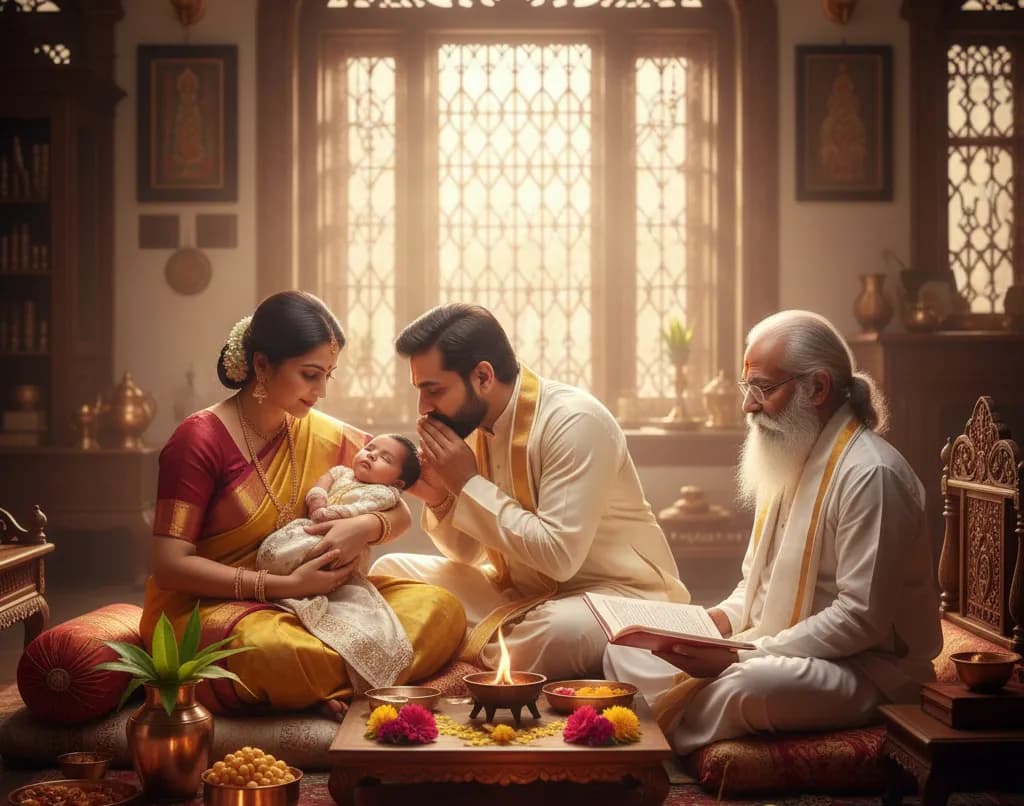
Father's Role: Traditionally, the father whispers the chosen name in the baby's right ear.
Why Whispering:
-
First communication of identity directly to the child
-
Intimate, sacred moment
-
The right ear is considered auspicious
-
Creates a special bond
-
Establishes the father's role in naming
The Act: Father leans close, cups his hands around baby's ear, and clearly but softly speaks: "Your name is [name]."
Repetition: Sometimes repeated three times for emphasis.
Modern Variations:
-
Mother may also whisper
-
Both parents together
-
In an online ceremony, the priest performs, and the family does at home simultaneously
-
Grandparents may participate
Public Announcement
After whispering, the name is announced aloud:
-
To family members present
-
To deities invoked
-
To cosmic witnesses
-
Formally establishing the identity
This dual nature, intimate whisper plus public declaration, captures both personal and social dimensions of identity.
Multiple Names in Hindu Tradition
Different Name Types
Nakshatra Name: The astrologically calculated name based on birth star, often considered the "true" spiritual name.
Calling Name (Vyavaharika): The everyday name used by family and friends may be different from the akshatra name.
Secret Name: Some traditions include a secret spiritual name known only to parents and the priest.
Gotra Name: Formal identification, including family lineage.
Pet Names: Informal nicknames used by family.
Why Multiple Names?
Practical: Nakshatra names might be difficult for daily use.
Spiritual: Keeping the "real" name sacred while using the everyday name protectively.
Social: Different contexts (home, school, temple, documents) may use different forms.
Modern: Many NRN families use different names in different cultural contexts.
Honey Ceremony (Madhu Prashana)
Traditional Practice
The Act: Baby's lips and tongue are touched with honey (sometimes mixed with ghee and gold).
Symbolism:
-
Sweet speech
-
Pleasant personality
-
Auspicious beginning
-
Good character
-
Attractiveness in social interactions
Mantras: Specific verses from the Vedas recited while applying honey.
Ayurvedic Dimension: Honey is considered beneficial for an infant's developing system (though modern medicine recommends avoiding honey before 1 year, families should follow pediatric advice).
Modern Practice: Some families do symbolically (very tiny amount) or skip entirely, focusing on spiritual symbolism rather than literal application.
Blessings and Wishes for the Child
Traditional Blessings
Ayushya (Longevity): "May you live 100 years", a traditional blessing for long life.
Aarogya (Health): Prayers for freedom from disease and robust health.
Vidya (Knowledge): Blessings for education, wisdom, and intellectual development.
Sampada (Prosperity): Material well-being and financial security.
Dharma: Righteous character, ethical living, virtue.
Sukha (Happiness): Joy, contentment, and peace throughout life.
Keerti (Fame): Good reputation, honor in society.
Namkaran and Other Infant Samskaras
Relationship with Other Ceremonies
Jatakarma (Birth Rituals): Performed immediately after birth, protective rituals, and the first feeding.
Nishkramana (First Outing): Taking the baby outside for the first time, usually 4th month, introducing them to the sun and the world.
Annaprashana/Pasni (First Solid Food): Introducing rice/solid food, usually 6-8 months.
Chudakarana/Mundan (First Haircut): Head-shaving ceremony, typically 1st or 3rd year.
Timing Coordination
Some families coordinate multiple ceremonies:
-
Namkaran + Nishkramana (if timing aligns)
-
Later, Namkaran was combined with Annaprashana
-
Regional customs vary on what can be combined
Modern Relevance and Adaptations
For Diaspora Families
Identity Preservation: Namkaran anchors Hindu identity in children growing up in non-Hindu cultures.
Cultural Education: The ceremony teaches children (when they're older) about their heritage.
Community Connection: Even done online, it connects families to the broader Hindu community and tradition.
Intergenerational Bonding: Grandparents in their homeland can participate via livestream, bridging distance.
Documentation: Creates a permanent record of the child's formal entry into the Hindu tradition.
Contemporary Adaptations
Online Ceremonies: Enabling traditional rituals for diaspora without compromising authenticity.
Bilingual Names: Choosing names that work in both Hindu and Western contexts.
Secular-Spiritual Balance: Families may do a formal Namkaran while using the everyday name publicly.
Professional Guidance: Priests offering naming consultation without a full ceremony for secular families.
Certificate Culture: Modern families value documentation, naming certificates, and recorded ceremonies.
Psychological and Social Benefits
Beyond spiritual beliefs, Namkaran offers tangible benefits:
Family Milestone: Creates a meaningful memory and marker in family history.
Identity Clarity: Formal naming provides psychological clarity about the child's identity.
Community Welcome: Socially marks a child's arrival and acceptance into the community.
Parental Bonding: The preparation and ceremony deepen parental commitment and bonding.
Cultural Competence: For NRN children, knowing their naming story helps navigate bicultural identity.
Values Transmission: The ceremony's meanings and blessings communicate parents' values and hopes.
Common Misconceptions
"It's just astrology/superstition": Even without belief in astrology, the ceremony serves psychological, social, and cultural functions.
"Any name is fine": While technically true, names do carry linguistic, cultural, and psychological weight worth considering.
"Must be done on exact day": Flexibility exists; the ceremony's completion matters more than perfect timing.
"Only for religious families": Many secular Hindu families perform Namkaran for cultural preservation.
"Father must whisper": Adaptations allow the mother, both parents, or a priest to perform this role.
Namkaran Sanskar represents Hinduism's sophisticated understanding that a name is far more than a label; it's a vibrational identity, astrological alignment, social announcement, and spiritual act all combined.
For NRN families, online Namkaran services make it possible to maintain this profound tradition authentically. Qualified Nepali priests perform the ceremony with proper procedures, calculate astrologically appropriate names, invoke protective blessings, and document the entire process, all while your family participates remotely from anywhere in the world.
Whether approached as a deep spiritual practice, cultural preservation, or meaningful family milestone, Namkaran offers a structured way to welcome your child into the Hindu tradition and the broader cosmic order with intention, blessings, and celebration.
The ancient ritual of formally naming a child continues to serve families today, reminding them that identity is sacred, names carry power, and welcoming new life deserves formal recognition before the divine, the ancestors, and the community.