Shrimad Bhagavat Parayan
2026-02-16
9.2 min read
Shrimad Bhagavat Parayan (श्रीमद्भगवद्भागवत पाठ पारायण) is recognized within Hindu tradition as the highest form of sacred recitation and devotional immersion. It is not merely the reading of scripture, but a spiritually transformative process rooted in divine revelation, sacred sound vibration, narrative theology, and the transmission of realized wisdom.
In Kali Yuga, the present age characterized by distraction, conflict, and spiritual decline, the Shrimad Bhagavatam stands as the most accessible and complete path toward purification, devotion, and liberation (Moksha).
This guide presents the full theological, scriptural, structural, historical, and spiritual foundation of Bhagavat Parayan.
1. What is Shrimad Bhagavat Parayan?
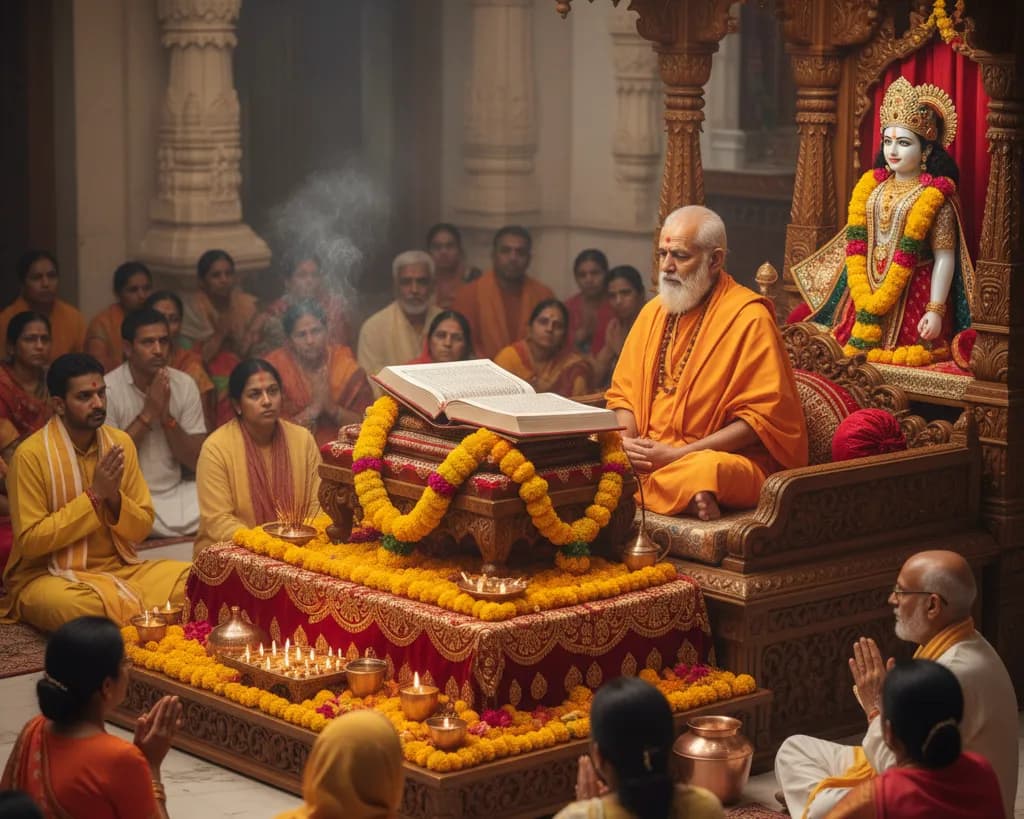
Shrimad Bhagavat Parayan refers to the complete recitation, narration, and devoted listening of the Shrimad Bhagavatam, one of the eighteen Mahapuranas of Sanatana Dharma.
The word “Parayan” derives from Sanskrit, meaning “to cross over.” It signifies the crossing of the soul over the ocean of samsara, the endless cycle of birth and death, toward divine realization.
Parayan includes:
-
The complete scripture of 12 cantos (Skandhas)
-
335 chapters (Adhyayas)
-
More than 18,000 Sanskrit verses (Shlokas)
-
Traditionally performed over seven days (Bhagavat Saptaha)
-
Devotional listening with sincerity and faith
Parayan is not passive hearing. It requires attentive absorption. Both the speaker and listener participate in spiritual merit (Punya) and divine grace.
It is regarded as a complete spiritual technology for elevating consciousness.
2. Divine Authorship and Scriptural Authority
Veda Vyasa — Incarnation of Narayana
The Shrimad Bhagavatam was composed by Veda Vyasa (Krishna Dvaipayana Vyasa), whom several scriptures identify as an incarnation of Lord Narayana.
The Vishnu Purana declares that Vyasa is Narayana Himself. The Mahabharata affirms that only Narayana could have compiled such divine knowledge.
This establishes that the Bhagavatam is not speculative philosophy but revealed scripture.
The Garuda Purana’s Declaration
The Garuda Purana describes the Bhagavatam as:
-
The purport of the Vedanta Sutra
-
The completion of the Vedas
-
The commentary on Gayatri
-
The essence of the Mahabharata
-
The Sama Veda among the Puranas
It is described as perfect and complete, requiring no supplementation.
This theological positioning elevates the Bhagavatam above all other Puranic literature.
3. Krishna as the Source of All Incarnations
The Bhagavatam makes a profound declaration:
Krishna is not merely an avatar.
He is the source of all avatars.
This theological position shifts spiritual focus from impersonal Brahman toward personal Bhagavan.
Canto 10, the largest section is dedicated to Krishna’s divine pastimes:
-
His birth in Mathura
-
Childhood in Gokula
-
Butter-stealing Leelas
-
Subduing demons
-
Rasa Leela with the Gopis
-
Protection of devotees
-
Participation in the Mahabharata
The Bhagavatam establishes that ultimate reality is personal, relational, and accessible through devotion.
4. The Ten Subjects of the Bhagavatam
The Bhagavatam systematically covers ten essential spiritual subjects:
-
Sarga – Primary creation
-
Visarga – Secondary creation
-
Sthanam – Cosmic structure
-
Poshanam – Divine protection
-
Utayah – Creative impetus
-
Manvantara – Cycles of Manus
-
Isha-Anukatha – Science of God
-
Nirodha – Dissolution
-
Mukti – Liberation
-
Ashraya – Supreme shelter (Krishna)
These ten subjects form a complete spiritual cosmology, from creation to ultimate refuge in the divine.
5. Anatomical Symbolism of the Twelve Cantos
Traditional scholars describe the twelve cantos as corresponding to the divine body of Krishna.
-
Cantos 1–2: The Feet (foundation of devotion)
-
Cantos 3–4: The Thighs (creative power)
-
Canto 5: The Navel (center of cosmic sustenance)
-
Canto 6: The Heart (compassion and redemption)
-
Cantos 7–8: The Shoulders (protection and strength)
-
Cantos 9–12: The upper body culminating in the divine face (Krishna’s pastimes)
This symbolic mapping reinforces that the Bhagavatam is not merely text — it is considered the living form of Krishna.
Historical Framework: King Parikshit
King Parikshit’s seven-day hearing establishes the Saptaha tradition.
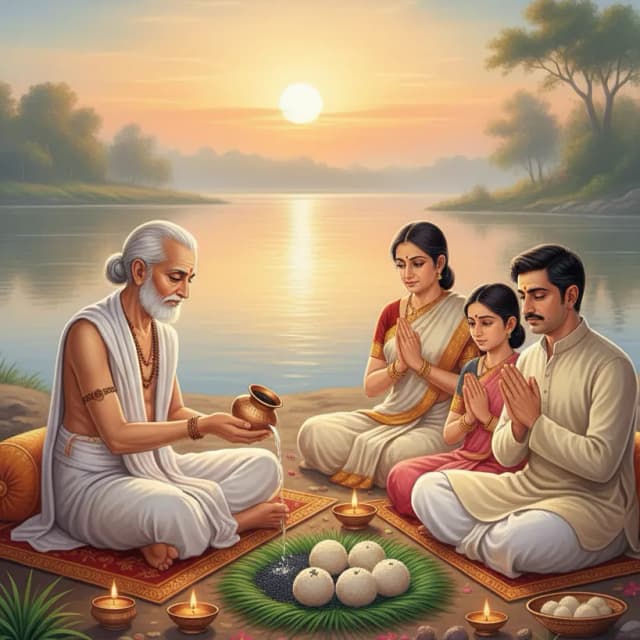
Cursed to die in seven days, he renounced his kingdom and listened to Sukadeva Goswami on the banks of the Ganges.
Through sincere absorption:
-
Fear dissolved
-
Attachment faded
-
Consciousness elevated
-
Liberation was attained
This narrative demonstrates that even karmic destiny can be transcended through Bhagavat Parayan.
Sukadeva Goswami: The Perfect Transmitter
Sukadeva Goswami represents realized spiritual authority.
He was:
-
Born fully enlightened
-
Detached from worldly life
-
Embodiment of Bhagavat wisdom
His narration was not academic — it was transmission.
The Bhagavatam emphasizes that realized teachers are essential for authentic Parayan.
The Spiritual Mechanism of Transformation
Bhagavat Parayan transforms consciousness through multiple layers:
1. Sanskrit Sound Vibration
Sanskrit is considered vibrationally aligned with cosmic principles. Proper recitation influences subtle consciousness.
2. Narrative Engagement
Stories bypass intellectual resistance and engage emotional devotion.
3. Three Modes of Understanding
The Bhagavatam operates through:
-
Shruta (scriptural authority)
-
Artha (explicit explanation)
-
Anjasa (condensed intuitive wisdom)
4. Sacred Immersion
Seven continuous days create a liminal psychological space for transformation.
5. Accumulated Punya
Both speaker and listener accumulate spiritual merit.
Structure of Bhagavat Saptaha
Each of the seven days traditionally includes:
-
Invocation rituals
-
Morning recitation sessions
-
Philosophical explanation
-
Afternoon narrative exposition
-
Evening kirtan and Aarti
-
Prasad distribution
Daily engagement ranges 7 to 9 hours.
The number seven represents cosmic completion and transformation.
Position Within Hindu Traditions
Vaishnavism
Bhagavatam as the supreme text; focus on Krishna Bhakti.
Advaita Vedanta
Philosophical emphasis on non-dual realization.
Tantric Understanding
Cosmic energy interpretation of creation and Shakti.
Nepali Hindu Tradition
Community-centered Saptaha during festivals; strong guru-disciple lineage.
Diaspora Context and Challenges
NRNs face challenges:
-
Lack of qualified reciters
-
Time constraints
-
Language barriers
-
Scattered communities
Modern solutions include:
-
Online livestream Saptaha
-
Recorded Parayan
-
Translations and commentary
-
Digital study groups
-
Home-based gatherings
Bhagavat Parayan becomes a bridge between heritage and modern life.
Psychological and Scientific Perspectives
Though fundamentally spiritual, Parayan aligns with observable effects:
-
Stress reduction
-
Emotional regulation
-
Strengthened community bonds
-
Meaning-centered living
-
Neuroplastic shifts through repetition
However, its ultimate mechanism transcends material explanation.
The Ultimate Goal: Moksha
Moksha is liberation from:
-
Ignorance
-
Fear
-
Karmic bondage
-
Rebirth
For Bhaktas, it is an eternal loving relationship with Krishna.
For Advaitins, realization of Brahman.
Bhagavat Parayan integrates knowledge and devotion, making liberation accessible even in Kali Yuga.
Panchagavya represents one of Hinduism's most ancient purification technologies, a practice connecting modern practitioners to thousands of years of unbroken spiritual tradition. For NRNs and diaspora Hindus, maintaining access to authentic Panchagavya consecration through online services preserves ritual accuracy while adapting to contemporary global reality. Whether approached as profound spiritual science, cultural tradition, or preparatory rite, Panchagavya consecration addresses the universal human need for purification, fresh beginnings, and sacred space in an often-chaotic world.
Social Share: