Janmotsav: Complete Guide
2026-02-16
12.4 min read
Janmotsav is the Hindu Vedic tradition of celebrating birthdays as sacred spiritual events rather than merely social occasions. This guide covers the scriptural foundations, cultural significance, astrological connections, and why this ancient practice remains relevant for modern families, especially those maintaining tradition across distance and generations.
What is Janmotsav?
Janmotsav (जन्मोत्सव) literally translates to "birth celebration," but its meaning extends far beyond a party. In Hindu tradition, each birthday marks:
The Completion of a Solar Year: One full revolution around the sun since birth, considered a significant cosmic cycle.
Return to Birth Nakshatra: The lunar mansion (nakshatra) occupied at birth returns to the same position, creating spiritual alignment.
Gratitude for Life: Formal thanks to deities, ancestors, and cosmic forces for another year of existence.
Renewal of Protection: Refreshing spiritual shields and seeking blessings for the upcoming year.
Life Stage Acknowledgement: Marking transitions through childhood, youth, adulthood, middle age, and elder years, each with specific spiritual significance.
Scriptural and Cultural Foundation
Vedic References
The concept of celebrating birth cycles appears in Vedic literature through:
Jyotisha (Vedic Astrology) Texts: Detailed calculations of planetary positions at birth and their cyclical returns. The Brihat Parashara Hora Shastra and other astrological texts emphasise the importance of birth moment and its annual recurrence.
Grihya Sutras: These domestic ritual texts describe various samskaras (life-cycle ceremonies). While not explicitly calling it "Janmotsav," they establish the framework for marking life stages.
Ayurvedic Connection: Charaka Samhita and Sushruta Samhita discuss constitution (prakriti) determined at birth and the importance of seasonal and cyclical observances for health.
Puranic Traditions
Krishna Janmashtami: The celebration of Lord Krishna's birth established the model for elaborate birthday observances. If divine births are celebrated, human births also merit spiritual recognition.
Rama Navami: Lord Rama's birth celebration similarly reinforced the sanctity of birth dates and their annual commemoration.
Deity Birth Celebrations: Various regional deities have elaborate birth celebrations (Ganesh Chaturthi, etc.), normalising the spiritual importance of birth dates.
Later Development
The formalised concept of Janmotsav as we know it today developed more explicitly in medieval and later Hindu tradition, combining:
-
Vedic astrological principles
-
Puranic devotional practices
-
Regional folk customs
-
Family lineage traditions
The Hindu Understanding of Birthdays
More Than Physical Birth
In Hindu philosophy, the birth moment is cosmically significant:
Karmic Moment: The soul enters a particular body at a specific time when planetary positions align with its karmic requirements.
Prarabdha Karma: The portion of past-life karma set to unfold in this lifetime is encoded in the birth chart (kundali).
Life Mission Blueprint: Traditional belief holds that birth time contains encoded information about life purpose, challenges, and opportunities.
Divine Timing: Nothing is random; the moment of birth is orchestrated by cosmic intelligence to provide the soul with optimal conditions for its evolution.
Annual Return
Each birthday represents:
Solar Return: Sun returns to the exact zodiac position it occupied at birth, creating a "new year" cycle in one's personal horoscope.
Nakshatra Recurrence: The birth nakshatra returns, reactivating the spiritual signature of the birth moment.
Planetary Review: Opportunity to assess which planets are now strong/weak compared to birth, informing the year ahead.
Spiritual Milestone: A checkpoint in the soul's journey through this lifetime.
Birth Nakshatra and Deity Connection
A central element of Janmotsav is the birth nakshatra (lunar mansion) and its associated deity:
The 27 Nakshatras:
Hindu astrology divides the zodiac into 27 nakshatras, each spanning 13°20'. Every person is born under one of these:
-
Ashwini - Ashwini Kumaras (celestial physicians)
-
Bharani - Yama (god of death/dharma)
-
Krittika - Agni (fire god)
-
Rohini - Prajapati/Brahma (creator)
-
Mrigashira - Chandra (moon)
-
Ardra - Rudra (fierce form of Shiva)
-
Punarvasu - Aditi (mother of gods)
-
Pushya - Brihaspati (Jupiter/divine teacher)
-
Ashlesha - Nagas (serpent deities)
-
Magha - Pitris (ancestors)
-
Purva Phalguni - Bhaga (god of fortune)
-
Uttara Phalguni - Aryaman (god of contracts)
-
Hasta - Savitar (solar deity)
-
Chitra - Vishwakarma (divine architect)
-
Swati - Vayu (wind god)
-
Vishakha - Indra-Agni (king of gods and fire)
-
Anuradha - Mitra (god of friendship)
-
Jyeshtha - Indra (king of gods)
-
Mula - Nirriti (goddess of destruction)
-
Purva Ashadha - Apas (water deities)
-
Uttara Ashadha - Vishwadevas (universal gods)
-
Shravana - Vishnu (preserver)
-
Dhanishtha - Vasus (elemental deities)
-
Shatabhisha - Varuna (ocean god)
-
Purva Bhadrapada - Aja Ekapada (one-footed deity)
-
Uttara Bhadrapada - Ahir Budhnya (serpent of depths)
-
Revati - Pushan (nourisher god)
Nakshatra Worship in Janmotsav:
During Janmotsav, the presiding deity of your birth nakshatra is specifically invoked for:
-
Protection throughout the year
-
Enhancement of positive natal qualities
-
Mitigation of challenging natal patterns
-
Connection to cosmic forces aligned with your birth
Milestone Ages and Their Significance
Hindu tradition recognises certain ages as particularly important:
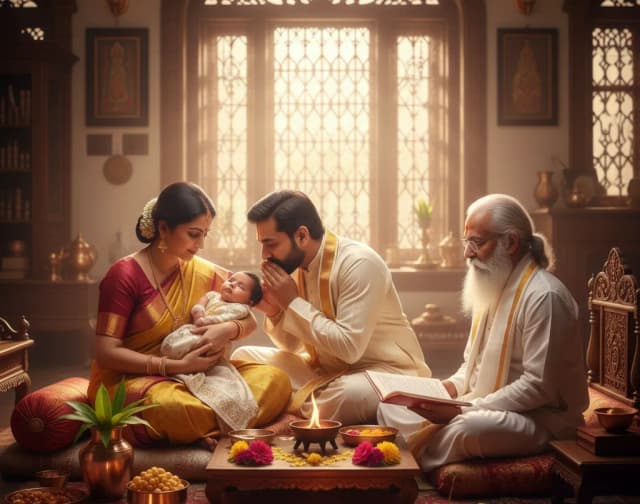
First Birthday (Prathama Janmotsav)
Critical Importance: Historically, infant mortality was high. Surviving the first year was a major milestone worthy of elaborate celebration.
Spiritual Significance: The soul has successfully anchored in physical form and passed the most vulnerable transition period.
Traditional Observances:
-
Anna Prashan (first rice feeding), if not done earlier
-
Mundan (first haircut) in some communities
-
Strong protective blessings for the coming years
-
Gift-giving to Brahmins and the poor
Fifth Birthday
Significance: Marks established childhood. The child has developed personality, speech, and social awareness.
Traditional: In some communities, formal education begins around this age (Vidyarambha ceremony).
Blessings Sought: Education, intelligence, good habits, social skills, and continued health.
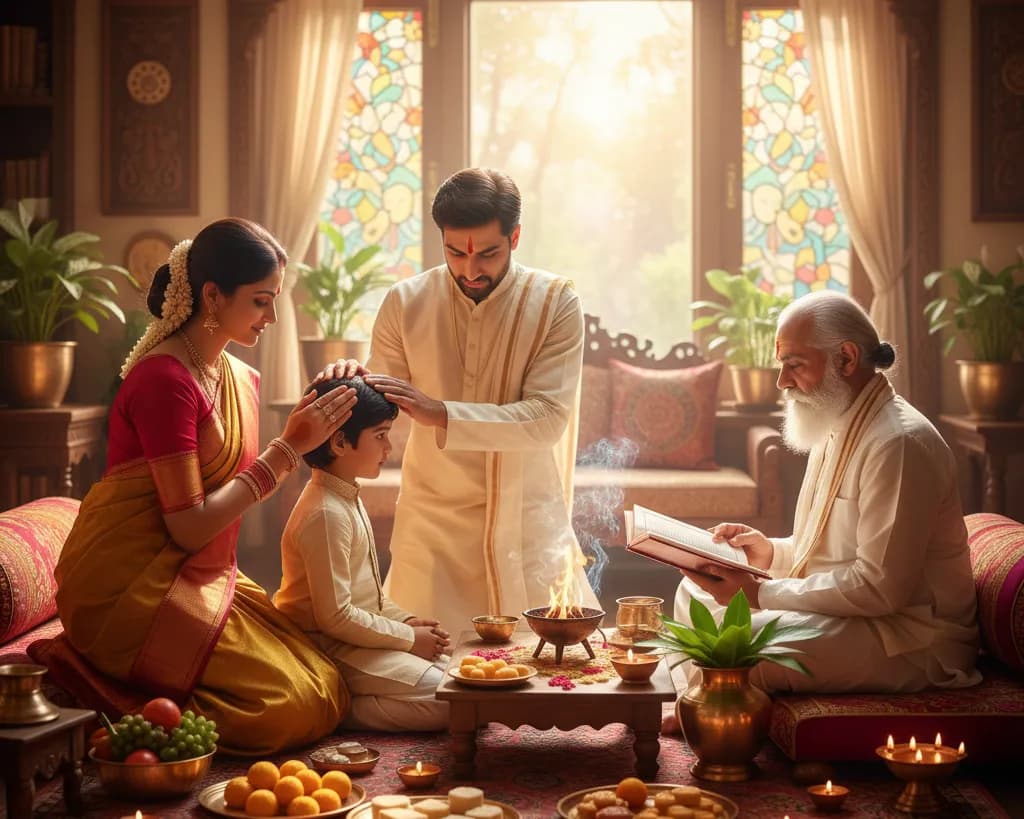
Sixteenth Birthday (Shodasha Janmotsav)
Critical Milestone: Traditional age for Upanayana (sacred thread ceremony) in Brahmin and some other communities. Mark's transition from childhood to youth.
Spiritual: Considered the beginning of individual karmic responsibility. Before this, parents bear the karmic weight of the child's actions.
Twenty-Fifth Birthday
Quarter-Century: Significant numerical milestone. By 25, career and marriage paths often become clearer.
Astrological: Jupiter completes its second cycle (12 years each). Saturn completes its first cycle. Important planetary milestone.
Fiftieth Birthday (Panchashatika Janmotsav)
Half-Century: Major milestone. Life midpoint in the traditional conception of a 100-year ideal lifespan.
Blessings: Health for the remaining years, wisdom, grandchildren's welfare, and spiritual deepening.
Sixtieth Birthday (Shashtiabda Poorthi)
Most Important Adult Milestone: Completion of five 12-year Jupiter cycles. Astrologically, return to the birth configuration.
Elaborate Ceremony: Traditionally includes:
-
Full Ayushya Homa (longevity fire ritual)
-
Renewal of marriage vows (if married)
-
Community feast
-
Major charitable giving
-
Gratitude prayers
Seventy-Fifth and Eightieth Birthdays
Elder Wisdom Years: Rare achievement historically. Mark's successful navigation of life's challenges.
Blessings: Peaceful final years, dignified elder role, good death, grandchildren's prosperity.
Astrological Dimensions of Janmotsav
Solar Return (Varshaphala)
Each birthday marks a solar return, the moment the Sun returns to its exact natal position. Vedic astrologers cast a solar return chart for the birthday moment to predict the coming year.
Janmotsav Importance: Performing proper rituals on a birthday (especially in challenging years) helps mitigate negative patterns and enhance positive ones.
Planetary Dashas
Hindu astrology uses planetary period systems (dashas) that govern life phases. Birthday ritual includes propitiating the planet whose dasha is currently running.
Specific Planetary Concerns
Sade Sati (Saturn's 7.5-year transit): When Saturn transits the natal Moon or adjacent signs, extra protection is needed during birthdays.
Rahu-Ketu Transits: These shadowy planets' movements create turbulent periods requiring additional rituals.
Jupiter Transit: Jupiter's position during the birthday year significantly affects fortune.
Nakshatra Return
The lunar mansion returns to birth position around the birthday (within days), creating heightened spiritual receptivity and an optimal time for nakshatra deity worship.
Janmotsav vs. Western Birthday Celebrations
Western Birthday Focus
-
Social celebration
-
Material gifts
-
Entertainment
-
Personal happiness
Janmotsav Focus
-
Spiritual renewal
-
Blessings and protection
-
Gratitude to divine forces
-
Family lineage connection
-
Karmic awareness
-
Life stage transition marking
Synthesis for Modern Families
Many NRN families successfully combine social celebration with spiritual ceremony, honouring both cultural contexts that children navigate.
Regional Variations
Nepali Tradition
Karmakanda Style: Nepali Brahmins follow specific procedural variations in Janmotsav that differ from Indian regional styles.
Newar Community: Elaborate on first birthday traditions involving rice feeding and special rituals.
Indian Regional Differences
South India: More elaborate ceremonies often including mini-homa (fire ritual) for milestone birthdays.
North India: Strong emphasis on first and sixteenth birthdays.
Bengal: Integration with regional goddess worship. Special sweets distribution.
Modern Relevance for Diaspora Families
Cultural Transmission
For NRNs and diaspora, Janmotsav serves a critical function:
Teaching Opportunity: Explaining Janmotsav to children teaches the Hindu worldview, karma, cosmic cycles, spiritual dimension of life events.
Identity Anchoring: Regular ritual observance maintains cultural identity across generations in foreign lands.
Family Cohesion: Shared ritual creates family bonding and cross-generational connection.
Addressing Modern Life Challenges
Stress and Anxiety: Annual spiritual checkpoint provides perspective, reduces anxiety through connection to larger cosmic order.
Life Direction: Birthday reflection with a spiritual framework helps clarify priorities and purpose.
Astrological Awareness: Understanding challenging periods helps prepare mentally.
Psychological Benefits
Beyond spiritual belief, Janmotsav offers:
Structured Reflection: Annual pause for life review and intention-setting.
Sense of Protection: Psychological comfort from blessings and protective rituals.
Meaning-Making: Framework for understanding life events as part of a larger pattern.
Generational Continuity: Feeling connected to ancestors who performed the same rituals.
Ethical Dimensions
Gratitude vs. Entitlement
Janmotsav teaches:
-
Life is a gift, not a right
-
Each year is borrowed time
-
Others contributed to your survival
-
Giving thanks develops humility
Social Responsibility
Traditional birthday observances include:
-
Feeding the poor
-
Donating to temples or causes
-
Helping those less fortunate
Modern Janmotsav can include charitable donations, volunteering, or environmental action.
For Parents: Explaining Janmotsav to Children
Age-Appropriate Framing
Young Children (3-7): "We're thanking God for keeping you healthy this year and asking for blessings for next year."
Older Children (8-12): "In our tradition, birthdays are spiritual events. The stars were in special positions when you were born, and they return around your birthday each year."
Teenagers: Can understand a fuller explanation of nakshatras, karma, and astrological dimensions.
Making It Engaging
-
Let children help with preparation
-
Explain each step age-appropriately
-
Show personal connection: "The priest is speaking YOUR name."
-
Combine social party AND spiritual ceremony
Janmotsav represents the Hindu tradition's sophisticated understanding of birth, time, and cosmic cycles. More than mere celebration, it's a spiritual technology for honouring the gift of life, seeking divine protection, marking life stages consciously, maintaining cultural continuity, and teaching profound values to the next generation.
For diaspora families, accessible online services now make it possible to maintain this ancient practice authentically, with proper Vedic procedures performed in Nepal by qualified priests, bridging tradition and modernity, homeland and adopted land.
Social Share: