Scientific Research on Rudraksha: Electromagnetic Properties and Modern Studies
2026-03-23
13 min read
When Ancient Wisdom Meets Modern Science
For thousands of years, the Rudraksha tradition rested entirely on the authority of scripture, the testimony of practitioners, and the unbroken lineage of yogic experience. The Shiva Purana declared its properties; saints and sages confirmed them through lifetimes of direct experience; and millions of devotees wore Rudraksha with faith in this cumulative human testimony.
In the twentieth and twenty-first centuries, a new layer of validation has emerged, one that neither replaces nor competes with the scriptural and experiential tradition, but complements it with the language and methodology of modern science. A growing body of scientific research from universities, independent laboratories, and international researchers has begun investigating the physical, chemical, electromagnetic, and biomedical properties of Rudraksha beads, producing findings that provide a scientific framework for understanding mechanisms through which the tradition's well-documented effects may operate.
The Physical Composition of Rudraksha
Botanical Identity
Rudraksha beads are the seeds of Elaeocarpus ganitrus Roxb., a large, evergreen, broad-leaved tree belonging to the family Elaeocarpaceae. The tree grows primarily in the sub-Himalayan terrain of Nepal, India, Indonesia, and parts of Southeast Asia. The seeds develop inside a blue fruit. The blue color, unusually vivid in the plant kingdom, is considered sacred in the tradition and corresponds to Shiva's association with the color.
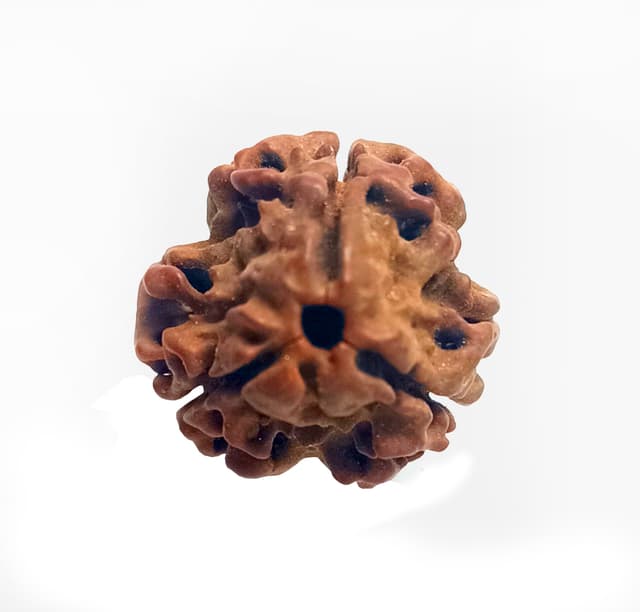
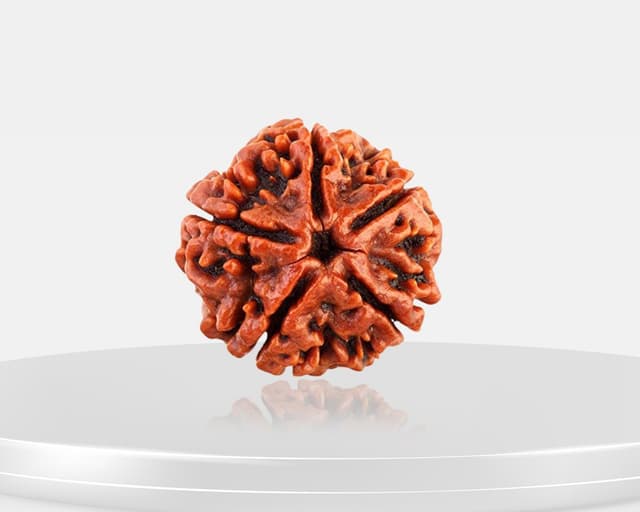
The mature seed, after the fruit pulp is removed and the seed dried, becomes the Rudraksha bead used for spiritual practice. It's hard, woody surface bears the distinctive natural vertical grooves, the mukhis (faces) that define each bead's type, each groove corresponding to a naturally occurring internal chamber (lokula) within the seed.
Chemical Composition
Laboratory analysis of Rudraksha beads has identified the following primary chemical constituents:
|
Component |
Classification |
Approximate Content |
|
Carbon |
Organic element |
50.024% |
|
Hydrogen |
Organic element |
17.798% |
|
Nitrogen |
Organic element |
0.9461% |
|
Oxygen |
Organic element |
30.4463% |
|
Trace elements |
Minerals |
~0.7836% |
Trace elements identified: Aluminum, calcium, chlorine, copper, cobalt, iron, magnesium, manganese, phosphorus, potassium, silicon, sodium, zinc. A remarkably broad spectrum of biologically active minerals is concentrated within a single seed.
The Electromagnetic Properties: The Most Significant Finding
The Discovery of Rudraksha's Electromagnetic Character
The most scientifically significant and extensively studied property of Rudraksha is its electromagnetic behavior, specifically its documented ability to generate, store, and transmit electrical charges in ways that interact measurably with biological systems.
The pioneering research in this area was conducted by scientists at several Indian universities in the latter decades of the twentieth century. Their findings, though not yet widely replicated in Western peer-reviewed journals, have been consistently confirmed across multiple independent Indian research programs and provide a scientifically coherent framework for understanding how a seed can influence human physiology through skin contact.
Dynamic Polarity: The Core Electromagnetic Property
Perhaps the most extraordinary electromagnetic property documented in Rudraksha research is what researchers have termed dynamic polarity, the ability of Rudraksha beads to change their magnetic polarity in response to the electromagnetic field of the wearer's body.
Conventional magnets and most materials with electromagnetic properties maintain a fixed polarity they are either north-seeking or south-seeking, positive or negative, and this polarity does not change in response to environmental conditions.
Rudraksha beads behave differently: their magnetic polarity appears to shift in response to the electromagnetic state of the body with which they are in contact, functioning less like a static magnet and more like an adaptive electromagnetic regulator.
The proposed mechanism: when the body's own electromagnetic field is disturbed by stress, illness, emotional disturbance, or environmental interference, the Rudraksha bead's dynamic polarity creates a corrective electromagnetic input that works toward restoring the body's natural electromagnetic equilibrium.
This adaptive quality would explain why Rudraksha is reported to benefit such a diverse range of conditions. It does not provide a fixed electromagnetic input but responds to each individual's specific electromagnetic state.
Inductance, Capacitance, and Resistance Measurements
Laboratory measurements of Rudraksha's electrical properties have produced several consistent findings:
Inductance: Rudraksha beads show measurable inductance, meaning they can store energy in a magnetic field. Values vary by mukhi, suggesting different electromagnetic properties.
Capacitance: Rudraksha shows measurable capacitance, meaning it can store electrical charge. In contact with skin, it may interact with the body’s bioelectric field and help regulate charge fluctuations.
Resistance: It has semiconductive resistance, neither fully conductive nor insulating, similar to biological tissues like nerves and skin, which may support its interaction with the body’s electrical systems.
Research on Specific Health Effects
Cardiovascular and Blood Pressure Effects
The most extensively documented health effect of Rudraksha in scientific literature is its apparent influence on cardiovascular function, specifically blood pressure regulation. Multiple independent studies have reported:
-
Hypotensive effect: Rudraksha wearing appears to produce a mild but measurable reduction in both systolic and diastolic blood pressure in hypertensive subjects over periods of 30–90 days
-
Heart rate stabilization: Subjects wearing Rudraksha show reduced heart rate variability in stress conditions compared to control groups, suggesting an autonomic nervous system stabilizing effect
-
Cardiac rhythm: Some preliminary studies have suggested Rudraksha wearing may positively influence cardiac rhythm irregularities, consistent with the tradition's specific recommendation for heart conditions
The proposed mechanism combines two factors: the alkaloid compounds (particularly saponins and flavonoids) absorbed through skin contact, influencing vascular tone, and the electromagnetic properties modulating the bioelectric field of the cardiac tissue directly.
Nervous System and Mental Health Effects
Research on Rudraksha's nervous system effects has produced findings consistent with the tradition's claims regarding stress reduction, mental calmness, and improved focus:
EEG studies: Meditation with Rudraksha shows a quicker shift from beta waves (active, stressed thinking) to alpha waves (relaxed, focused awareness), indicating faster mental calmness.
Cortisol levels: Some studies report reduced salivary cortisol levels in people wearing Rudraksha over time, suggesting lower stress and anxiety.
Neurotransmitters: Rudraksha contains beta-carboline compounds that may interact with enzymes affecting serotonin and dopamine, providing a possible explanation for improved mood, mental clarity, and emotional balance.
Antimicrobial Properties
Laboratory studies of Rudraksha seed extracts have demonstrated antimicrobial activity against several pathogenic organisms:
-
Staphylococcus aureus (gram-positive bacteria)
-
Escherichia coli (gram-negative bacteria)
-
Candida albicans (pathogenic fungus)
-
Several other common pathogens
The antimicrobial activity is attributed primarily to Rudraksha's tannin and alkaloid content. While wearing a Rudraksha bead does not deliver the concentrated extract concentrations used in laboratory studies, the traditional practice of soaking Rudraksha in water overnight and drinking the water may deliver biologically relevant concentrations of these antimicrobial compounds.
Anti-inflammatory and Antioxidant Effects
Rudraksha's flavonoid and tannin content provides a documented basis for anti-inflammatory and antioxidant effects. Research has confirmed:
-
Significant free radical scavenging activity in Rudraksha extracts
-
Inhibition of pro-inflammatory enzyme COX-2 in laboratory studies
-
Antioxidant capacity comparable to or exceeding several well-studied medicinal plants
These findings are consistent with the tradition's recommendations for chronic inflammatory conditions, arthritis, skin conditions, and the general category of conditions associated with oxidative stress and chronic low-grade inflammation.
The Bioelectric Interface: How Rudraksha Interacts with Human Skin?
The most direct mechanism of Rudraksha's physical interaction with the body is through skin contact, the interface between the bead's surface and the body's largest organ. This interface involves multiple simultaneous interactions:
GSR modulation: Studies show that Rudraksha can reduce galvanic skin response (GSR), meaning lower electrical reactivity of the skin during stress. This suggests a calming effect on the nervous system and reduced emotional arousal.
Piezoelectric effect: The bead’s natural structure may produce small electrical charges when subjected to pressure or movement. During daily activities, these micro-impulses could interact with the body’s bioelectric field, though this mechanism is still theoretical.
Transdermal absorption: Rudraksha contains lipophilic (fat-soluble) compounds that may be absorbed through the skin in trace amounts during prolonged contact. While effects at such low levels are likely subtle, they may still contribute to minor neurochemical influence and overall physiological response.
The Five Mukhi Research Finding
One of the most scientifically interesting findings specific to Rudraksha research involves the 5 Mukhi bead's electromagnetic profile. Multiple independent measurements have found that the 5 Mukhi Rudraksha produces electromagnetic readings more consistent with human bioelectric field parameters than any other mukhi count, offering a scientific correlate for the tradition's designation of 5 Mukhi as the universally applicable, universally safe bead suitable for all human beings.
The proposed explanation: the five internal chambers of the 5 Mukhi create a specific geometric electromagnetic configuration that resonates harmonically with the five-frequency electromagnetic signature of the healthy human bioelectric field. This resonance, essentially electromagnetic entrainment between the bead and the body, would explain both the 5 Mukhi's universal safety and its universal benefit.
Honest Assessment: What Science Has and Has Not Established
Scientific integrity requires distinguishing clearly between what has been established, what is preliminary, and what remains speculative:
Scientifically Established
-
Rudraksha's chemical composition, including specific alkaloids and biologically active compounds
-
Measurable electromagnetic properties: inductance, capacitance, resistance, and dielectric constant
-
Antimicrobial activity of Rudraksha extracts in laboratory conditions
-
Antioxidant and anti-inflammatory activity of Rudraksha extracts
-
Preliminary cardiovascular and blood pressure effects in small study populations
Preliminary / Promising but Requiring Further Research
-
Dynamic polarity and its adaptive interaction with body electromagnetic fields
-
EEG alpha wave enhancement during Rudraksha-accompanied meditation
-
Cortisol reduction in long-term wearers
-
Neurotransmitter influence through transdermal alkaloid absorption
-
Variation in electromagnetic properties by Mukhi count
Not Yet Scientifically Investigated
-
The mechanism of mukhi-specific effects (beyond electromagnetic variation by mukhi count)
-
The influence of energization (Pran Pratishtha) on measurable physical properties
-
Long-term health outcomes in large, controlled clinical populations
-
The role of belief and expectation (placebo effect) versus direct physiological mechanisms
-
Comparative effectiveness of Nepal vs. Java vs. India origin beads
The Science-Tradition Relationship: A Balanced View
Scientific studies on Rudraksha reveal real physical properties such as electromagnetic behavior and bioactive compounds, supporting some traditional claims related to stress, heart, and nervous system effects.
However, its deeper spiritual aspects like karma, consciousness, or chakra activation remain beyond the scope of current science.
In essence, science provides partial validation of Rudraksha’s benefits, while its full significance continues to lie in personal experience and traditional practice.
Frequently Asked Questions
1: Has Rudraksha been studied in Western universities or only in Indian institutions?
The majority of published Rudraksha research has been conducted at Indian universities and research institutions primarily in the fields of botany, pharmacology, and traditional medicine. Limited Western academic attention has been given to Rudraksha specifically, though the electromagnetic and alkaloid properties documented by Indian researchers are consistent with properties measurable by any well-equipped laboratory. The gap in Western research reflects priorities in research funding rather than implying the findings are invalid. Most plant-based traditional medicine systems have been studied primarily within their cultural contexts before attracting Western research attention.
2: Does the scientific evidence mean Rudraksha is primarily a medical device rather than a spiritual one?
No, the scientific evidence provides a physical mechanism framework for some of Rudraksha's effects without defining or limiting what Rudraksha is. A temple bell produces sound waves measurable by physics, but this does not make it "merely" an acoustic device rather than a sacred instrument. Rudraksha's electromagnetic properties, alkaloid chemistry, and bioelectric interactions are the physical layer of a multi-dimensional reality that also includes its devotional, karmic, and consciousness-transforming dimensions. Science describes the measurable surface; the tradition describes the full depth.
3: If Rudraksha has pharmaceutical alkaloids, is there a risk of toxicity from wearing it?
The alkaloid concentrations potentially absorbed through normal skin contact with a Rudraksha bead are far below pharmacologically active doses, the quantities that would produce measurable drug-like effects. The alkaloids present in Rudraksha are not toxic at these concentrations. People who chew or ingest whole Rudraksha seeds, or who drink very concentrated Rudraksha seed extracts, should exercise caution, but wearing the bead against the skin presents no toxicity concern at normal use levels.
4: Does the scientific research support wearing Rudraksha regardless of whether one follows its spiritual practices?
The physical properties, electromagnetic, alkaloid, cardiovascular, and stress-reducing effects function through mechanisms that do not require belief, mantra practice, or spiritual orientation. A completely secular person wearing an authentic Rudraksha would receive the bead's physical effects. However, the tradition consistently reports that conscious practice, mantra, devotion, and intentional wearing produce dramatically more significant effects than passive wearing alone, suggesting that the physical mechanisms interact synergistically with mental and spiritual engagement in ways that science is only beginning to explore through psychoneuroimmunology and related fields.