Rudraksha Care and Maintenance: Cleaning, Oiling & Storage Complete Guide
2026-03-20
25.3 min read
Rudraksha beads are living sacred instruments, seeds born from the Himalayan forests of Nepal that carry a specific bioelectric and spiritual energy field. Unlike gemstones that are inert minerals requiring only physical cleaning, Rudraksha is an organic seed that is simultaneously a physical object and an energetic tool. How you care for it directly determines both its physical longevity and its continued spiritual and energetic potency.
Neglected Rudraksha dried out, cracked, coated in dust and skin oil, stored carelessly loses its surface integrity, its natural luster, and over time its energetic effectiveness. A well-cared-for Rudraksha bead worn and maintained with consistent devotion, by contrast, deepens in its energy and presence over the years, becoming more attuned to the wearer, more visually rich, and more spiritually potent with each passing season.
The great yogis and saints of the Shaivite tradition wore their Rudraksha for decades, some for their entire lifetimes, and passed beads down through generations. These beads, worn and cared for consistently over lifetimes of devotional practice, are among the most sacred and energetically powerful Rudraksha in existence. Your care practice begins the moment your bead arrives.
Understanding the Rudraksha Bead: What You Are Caring For
Before establishing a care routine, understanding what Rudraksha physically is helps explain why specific care practices matter:
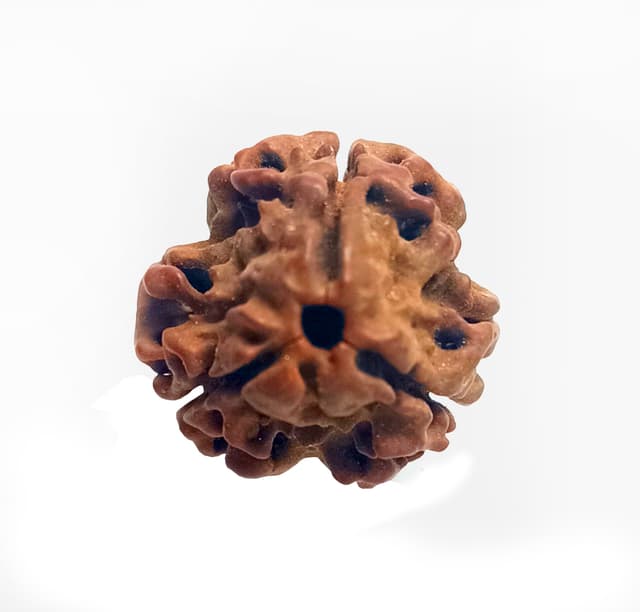
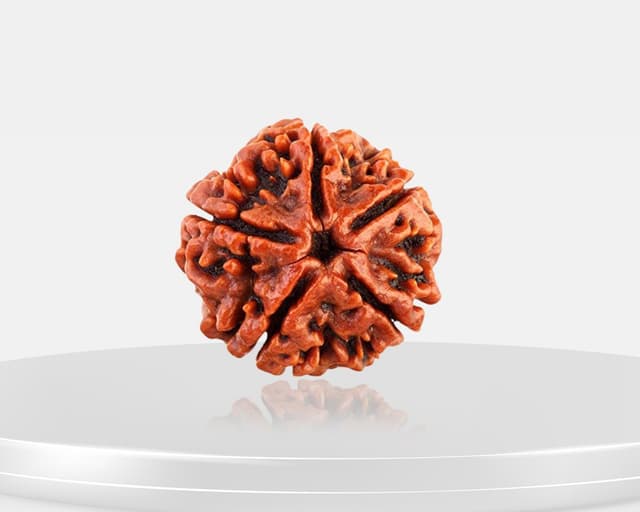
Material: Rudraksha is the dried seed of the Elaeocarpus ganitrus tree, a hard, naturally textured seed with a dense fibrous interior. The outer surface has natural ridges (the mukhi lines), pores, and organic texture variations.
Organic nature: Being an organic seed material, Rudraksha is subject to:
-
Drying and cracking when moisture is depleted, particularly in dry climates or air-conditioned environments
-
Accumulating debris in its natural pores and mukhi grooves skin oil, dust, incense residue, sweat, and soap
-
Thread degradation the thread, cord, or wire holding the bead requires regular inspection and replacement
-
Surface darkening natural oils from skin contact and deliberate oiling create a deep, rich patina over time (desirable, not damage)
Energetic dimension: Beyond the physical, the bead maintains its energetic field through:
-
Regular physical contact with the wearer's skin
-
Consistent mantra practice and devotional attention
-
Periodic ritual cleansing and re-energizing
-
Respectful storage when not being worn
Daily Care: What to Do Every Day
Wearing as Primary Care
The single most important daily care practice for Rudraksha is simply wearing it consistently. Daily skin contact is both the primary delivery mechanism of its benefits and the most important factor in maintaining the bead's energetic attunement to the wearer.
A Rudraksha that sits in a drawer is not being cared for it is being neglected.
Morning Mantra: Energetic Daily Reset
Each morning before or immediately after putting on your Rudraksha, perform this brief practice:
-
Hold the bead in both hands at heart level
-
Take three slow breaths, bringing your full attention to the bead
-
Chant "Om Namah Shivaya" 3 times, or your mukhi-specific mantra 11 times
-
Consciously set your intention for the day while holding the bead
-
Wear with gratitude
This takes less than two minutes and creates a daily energetic reset, maintaining the bead's attunement to your current consciousness and intentions rather than allowing it to drift into unconscious habit.
What to Avoid Daily
-
Direct contact with chemical soaps and body wash, the sulfates and detergents in most commercial soaps strip the bead's natural oils and degrade the surface over time. When bathing, either remove the bead or ensure soap does not soak directly into it
-
Chlorinated water, swimming pools, and hot tubs contain chlorine that will damage the surface and degrade the thread rapidly; always remove before swimming
-
Heavy physical impact: Avoid wearing your most valuable beads during activities where they may be struck hard (contact sports, heavy manual labor)
-
Prolonged submersion in any water, brief contact with water during bathing, is fine; prolonged submersion weakens the thread and may soften the bead's surface slightly over time
Weekly Care: The 7-Day Rhythm
Once a week, ideally on the day associated with your mukhi's ruling planet, perform a brief cleaning and inspection:
Quick Weekly Clean
-
Remove the bead from its thread if possible, or work carefully around the thread
-
Take a soft, dry, or very slightly damp cotton cloth
-
Gently wipe the entire surface of the bead, removing accumulated skin oil, sweat residue, and surface dust
-
Use a soft, natural bristle brush (a clean toothbrush works well) to gently clean the mukhi grooves and pores, where debris accumulates most heavily
-
Allow to air dry completely if any moisture was used. Never store or oil a damp bead
-
Inspect the thread for signs of wear, fraying, or loosening. Address immediately if found
Thread Inspection Checklist
-
Check each knot for security. Any loose knot should be re-tied immediately
-
Look for fraying, discoloration, or thinning of the thread material
-
Check the clasp or closure mechanism if using one
-
For elastic bands, check elasticity; if the band has lost significant tension, replace it before it breaks
Rule: It is far better to proactively replace a thread that looks slightly worn than to lose a precious bead because you delayed. The cost of re-stringing is negligible compared to the value of the bead.
Monthly Care: Deep Cleaning and Oiling
The monthly care ritual is the most important maintenance practice in the entire Rudraksha care system and the one most commonly neglected. Perform it on the Pradosha (13th lunar day) of each month for maximum auspiciousness, or simply on any Monday of the month.
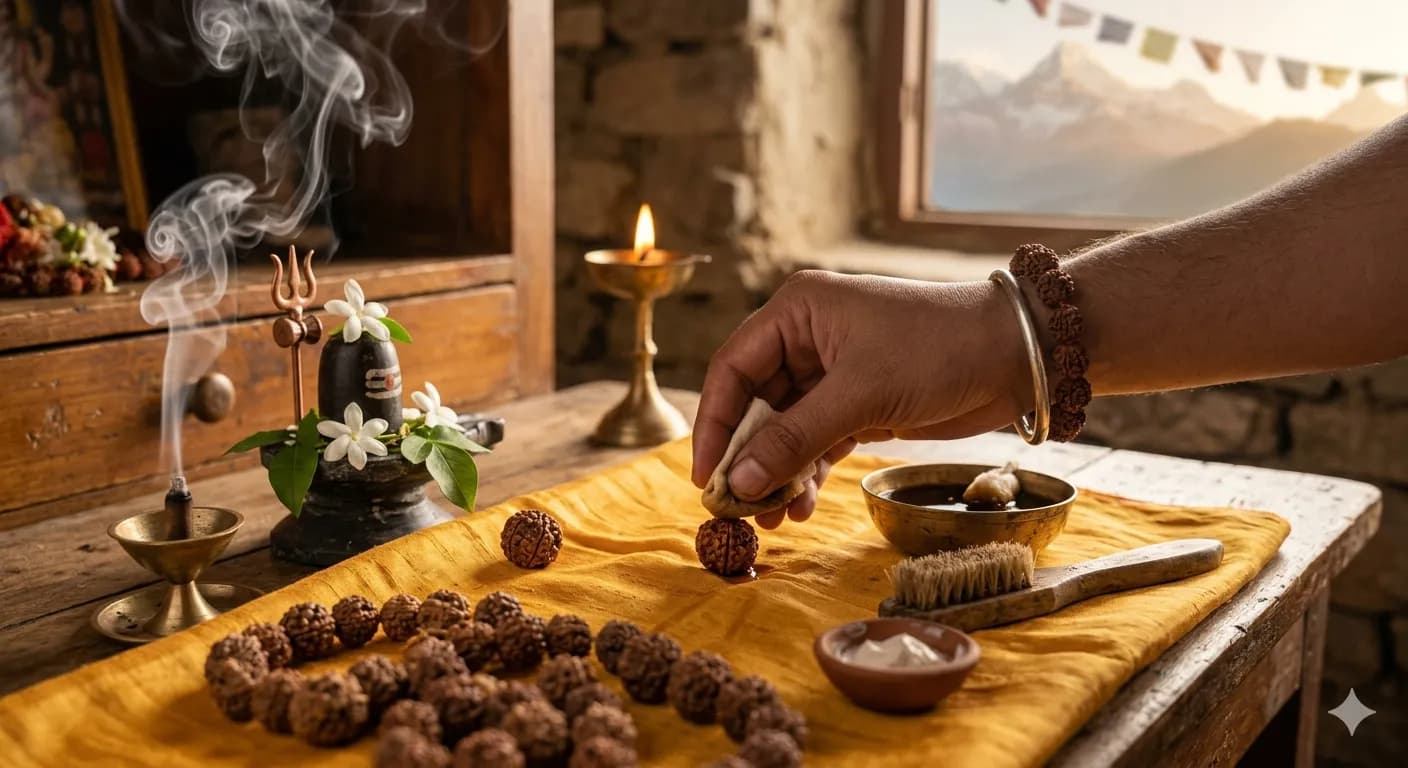
Step 1: Preparation
-
Lay out a clean white or yellow cloth on your puja space
-
Prepare: a soft brush, clean cotton cloths, sesame oil or sandalwood oil, a small bowl of clean water, and incense
Step 2: Remove From Thread
For deep monthly cleaning, remove the beads from their thread if the stringing allows. This enables complete cleaning of the entire bead surface, including the area covered by thread contact.
Step 3: Soaking (Optional, for heavily soiled beads)
For beads that have accumulated significant debris in the grooves, particularly those worn during physically active or dusty activities, a brief soak in plain clean water (5–10 minutes maximum) loosens debris effectively. Do not use soap, detergent, or any chemical cleaner.
Step 4: Cleaning the Grooves
Using a soft, natural bristle brush:
-
Work systematically along each mukhi groove from crown to base
-
Use small circular motions in areas of visible debris accumulation
-
The goal is to remove all accumulated material from the pores and grooves without scratching the surface
-
For Nepal-origin large beads with deep grooves, a wooden toothpick can very gently dislodge compacted debris from the deepest groove sections
Step 5: Rinse and Dry
-
Rinse under a gentle flow of clean room-temperature water
-
Pat dry thoroughly with a clean soft cloth
-
Allow to air dry completely for at least 30–60 minutes before oiling oiling a wet or damp bead traps moisture inside the pores and can lead to internal degradation over time
Step 6: Oiling (The Most Important Monthly Step)
Oiling is the single most important maintenance practice for preserving Rudraksha's physical integrity and energetic potency. The bead's organic fibrous material requires regular oil replenishment to prevent drying, cracking, and surface degradation.
Recommended oils (in order of preference):
|
Oil |
Properties |
Best For |
|
Sandalwood oil |
Sacred, cooling, deeply penetrating |
All mukhis the universal choice |
|
Sesame oil |
Warming, deeply nourishing, traditional |
Saturn-associated mukhis (7, 14) |
|
Mustard oil |
Traditional Ayurveda has strong penetration |
Older, very dry beads needing restoration |
|
Ghee (clarified butter) |
Supremely sacred, Vedic tradition |
Ritual oiling for special occasions |
|
Coconut oil |
Light, easily absorbed |
Indonesian beads, mild maintenance |
Oils to avoid:
-
Synthetic fragrance oils contain alcohol and chemicals that damage the surface
-
Petroleum-based oils (baby oil, mineral oil) do not penetrate organically and create surface buildup
-
Essential oils are undiluted or too concentrated; always dilute in a carrier oil
Oiling process:
-
Place 2–3 drops of your chosen oil on a clean cotton cloth or directly on your fingertip
-
Apply to the bead surface using gentle circular motions, work the oil into all mukhi grooves and pores
-
Apply a second layer if the bead is visibly absorbing oil quickly (indicating it was dry)
-
Allow to absorb for 15–20 minutes
-
Gently wipe away any excess surface oil with a clean dry cloth. You want the oil absorbed into the bead, not sitting on the surface
After oiling, the bead should have a natural, subtle sheen, not a heavy, greasy appearance. As the oil absorbs over 24 hours, the bead will develop a beautiful, deep luster that enhances with each oiling over months and years.
Step 7: Re-energizing After Cleaning
After monthly cleaning, perform a brief re-energizing practice before re-wearing:
-
Hold the cleaned, oiled bead in both hands
-
Offer it briefly to the smoke of incense (preferably sandalwood or dhoop), Dhoop Deepam (incense purification)
-
Chant your mukhi's beej mantra 108 times while holding the bead
-
Re-string on fresh thread if the old thread has any wear
-
Wear with renewed intention
Annual Care: The Deep Restoration Ritual
Once a year, ideally on Mahashivaratri (the most sacred night of Lord Shiva, typically February/March) or on the anniversary of first wearing, perform the annual deep restoration:
Panchamrita Abhishek
Perform a full Panchamrita (five sacred substances) ritual bath for the bead:
-
Milk, purification, and Shiva's sacred offering
-
Curd (yogurt), prosperity, and nourishment
-
Honey, sweetness, and Lakshmi's blessing
-
Ghee, sacred fire energy, and Vedic tradition
-
Sugar water, auspiciousness, and divine grace
Process:
-
Pour each substance slowly over the bead while chanting "Om Namah Shivaya."
-
After all five substances have been offered, rinse thoroughly with clean water
-
Dry completely (allow several hours of air drying, the Panchamrita process introduces more moisture than routine cleaning)
-
Perform the full oiling process
-
Re-string on an entirely new thread
-
Perform a complete 108-mantra re-energizing session
Annual Thread Replacement
Regardless of apparent condition, replace the thread on your most valuable beads annually. The thread degrades gradually and invisibly; what appears adequate to the eye may have lost significant strength through months of sweat, oil, and mechanical stress.
Thread selection guide:
|
Thread Type |
Best For |
Change Frequency |
|
Red silk thread |
All Shiva-related mukhis |
Every 6–12 months |
|
White silk thread |
Moon/Venus mukhis (2, 6, Gauri Shankar) |
Every 6–12 months |
|
Yellow thread |
Jupiter mukhis (5) |
Every 6–12 months |
|
Gold wire + silk |
High-value beads (8+) |
Wire: 2–3 years; inspect annually |
|
Elastic band |
Bracelets |
Every 6 months |
|
Copper wire |
Mars/Saturn mukhis (3, 7) |
1–2 years; inspect quarterly |
Storage — When You Are Not Wearing Your Rudraksha
The Golden Rule of Rudraksha Storage
Your Rudraksha should be on your body or on your altar, never in a drawer, a bag, or a jewelry box mixed with other items.
This is not merely a spiritual principle, it reflects a practical reality. Rudraksha stored casually with other objects risks:
-
Physical impact and scratching
-
Thread stress from tangling
-
Absorption of environmental energies from proximity to electronic devices, synthetic materials, or negative environments
-
Gradual energetic disconnection from the wearer
The Altar Primary Storage
When not wearing, place your Rudraksha on your home altar or puja space:
-
On a clean silk cloth, red or yellow preferred
-
Near your Shiva murti or the central deity of your practice
-
With an incense stick burning nearby, when possible, the continuous subtle smoke purifies the ambient energy around the bead
-
Do not place directly on the floor; always elevated on a cloth, wooden platform, or in a sacred container
Storage Containers
For those who need to travel with their Rudraksha or store temporarily away from their altar:
-
Silk pouch: The traditional and most appropriate storage red or yellow silk, drawstring closure, sized appropriately for the bead without excess space (which allows movement and impact)
-
Wooden box lined with silk: For collections, each bead in its own compartment, non-contact storage between beads
-
Silver or copper container: Metal containers provide additional energetic protection, particularly appropriate for very high-value rare mukhis
What to Avoid in Storage
-
Plastic bags or containers, synthetic materials create an energetically dissonant environment for organic sacred beads
-
Mixed storage with non-Rudraksha jewelry, metal jewelry can scratch and dent Rudraksha surfaces; energetically dissimilar objects create interference
-
Near electronic devices, such as mobile phones, computers, and televisions, generate electromagnetic fields that, over extended storage periods, can affect the bead's subtle energy field
-
In bathrooms, humidity fluctuations in bathrooms are particularly damaging to organic beads over time; the bathroom's energetic quality is also not appropriate for sacred objects
Restoring an Old or Neglected Rudraksha
If you have inherited an old bead, purchased a second-hand Rudraksha, or rediscovered a bead you neglected for years, restoration is entirely possible:
Assessment First
Examine the bead carefully:
-
Surface condition: Minor surface scratches and dulling are fully restorable. Deep cracks that extend toward the interior chambers are more serious. Consult a specialist
-
Mukhi line clarity: Partially obscured mukhi lines are usually recoverable through cleaning. If lines appear to have been artificially deepened (indicating fake enhancement), the bead needs professional assessment
-
Thread condition: Old thread should always be replaced before any restoration wearing
Restoration Process
Step 1. Extended soak (for very dry/dirty beads)
Soak in clean warm water (not hot) for 20–30 minutes; this rehydrates the surface and loosens decades of accumulated debris.
Step 2. Deep groove cleaning
Use a soft brush with methodical, patient cleaning of every groove. For severely compacted debris, multiple cleaning sessions over several days may be needed, do not force or use abrasive tools.
Step 3. Multi-session oiling
A severely dried-out bead may require 3–5 days of repeated oiling sessions:
-
Apply oil generously on Day 1
-
Allow full absorption overnight
-
Apply again on Day 2
-
Continue until the bead stops readily absorbing oil. This signals adequate rehydration
-
Final surface polish with a dry cloth
Step 4. Full Pran Pratishtha
A restored bead that has been inactive for years, or acquired from an unknown source, should undergo a complete Pran Pratishtha re-energizing ceremony before wearing it either at Pashupatinath or through a qualified pandit's home ceremony. This clears any accumulated energies from the bead's history and re-establishes it fresh for the new wearer.
Caring for Different Rudraksha Forms
Rudraksha Mala (108 Beads)
-
The mala requires more frequent thread inspection due to the stress on 108 individual knots
-
After each use for japa, wipe the entire mala with a soft dry cloth to remove finger oil and perspiration
-
Store draped over a clean wooden mala holder or rolled in a silk cloth, never bunched loosely
-
Oil a mala bead-by-bead using a cloth; do not pour oil directly onto the mala as it saturates the thread
-
Replace the mala thread every 12–18 months regardless of apparent condition
Rudraksha Bracelet
-
The elastic or thread in bracelets experiences the highest mechanical stress of any Rudraksha form. Check weekly and replace every 6 months proactively
-
Oil bracelet beads while on the wrist, using a cotton ball with a small amount of oil, working it into each bead in sequence
-
Remove before washing hands with soap. The wrist position makes soap contact particularly likely
High-Value Rare Mukhis (8 Mukhi and Above)
-
These beads deserve the most meticulous care. Their rarity and value make preservation critical
-
Consider professional gold or silver capping for beads above NPR 50,000 in value. The metal cap protects the most vulnerable part of the bead (the crown) from impact damage
-
Store individually in separate silk pouches, never together in a shared container
-
X-ray re-certification every 5 years is recommended for high-value beads to document continued integrity
Ganesh Rudraksha and Gauri Shankar
-
The natural protrusion of Ganesh Rudraksha and the natural join of Gauri Shankar are the most physically vulnerable points handle with specific care in these areas
-
Store in padded, molded containers that support the bead without placing mechanical stress on the protrusion or join
-
Oil the protrusion/join area gently with a fine brush; never pour oil directly onto these delicate structures
Signs Your Rudraksha Needs Attention
|
Sign |
What It Means |
Action Required |
|
Surface appears dull and lifeless |
Oil-depleted, dry |
Monthly oiling immediately |
|
Visible cracks on the surface |
Severely dried out |
Extended rehydration process (see restoration guide above) |
|
White powder in grooves |
Soap/chemical residue buildup |
Deep cleaning required |
|
The thread looks thin or frayed |
Thread nearing failure |
Replace immediately |
|
The bead feels lighter than it used to |
Internal drying |
Multi-session oiling |
|
Mukhi lines appear faded |
Heavy debris accumulation |
Deep groove cleaning |
|
Bead has a strong, unpleasant odor |
Bacterial growth in pores from sweat |
Deep cleaning + brief diluted neem water rinse |
|
Bead feels "energetically flat." |
Needs re-energizing |
Monthly mantra practice + annual Pran Pratishtha |
Common Care Mistakes to Avoid
Mistake 1: Using chemical jewelry cleaners
Rudraksha is not a gemstone or metal. Chemical cleaners designed for jewelry will strip the bead's natural oils, damage the surface, and energetically neutralize the bead. Use only water and natural oils.
Mistake 2: Placing in direct sunlight for extended periods
Brief morning sunlight contact (1–2 hours) is acceptable and mildly energizing. Extended direct sunlight exposure over hours and days will dry out the bead rapidly, cause surface bleaching, and increase cracking risk.
Mistake 3: Over-oiling
More oil is not better. A bead that is perpetually coated in excess oil accumulates dust and debris in its pores more rapidly. Apply oil, allow absorption, wipe excess. The goal is a bead that is hydrated from within, not coated from without.
Mistake 4: Neglecting the thread while caring for the bead
Many people meticulously care for the bead while ignoring the thread that holds it. The thread is the bead's lifeline; a broken thread means a dropped bead, and a dropped rare Rudraksha on a hard floor can crack. Treat thread care with equal seriousness.
Mistake 5: Storing in the bathroom
The bathroom is the most energetically inappropriate and physically damaging storage environment. High humidity, exposure to chemical products, and the energetic qualities associated with waste make it unsuitable for sacred beads.
Mistake 6: Wearing during inappropriate activities without consideration
Chemical exposure (swimming pools, cleaning chemicals, industrial environments), extreme physical impact risk, and energetically incompatible environments (funerals, during certain lunar periods) all warrant removing the bead. This is not superstition, it is the practical protection of a valuable, organic, sacred instrument.
Frequently Asked Questions
1: How often should I oil my Rudraksha?
Once a month is the standard recommendation for regularly worn beads. In very dry climates or air-conditioned environments where the bead dries out faster, oiling every 2–3 weeks may be appropriate. In humid environments, once every 6–8 weeks may suffice. The bead itself tells you when it starts to look dull or feel dry, it needs oil.
2: Can I wear Rudraksha while sleeping?
Yes, wearing Rudraksha during sleep is completely acceptable and is actually recommended by many spiritual teachers, particularly the 5 Mukhi (peace, good dreams) and 2 Mukhi (Moon, emotional calm). If you find it physically uncomfortable, place it on your pillow or bedside altar overnight. Remove before bathing in the morning.
3: What happens if my Rudraksha breaks or cracks?
A cracked Rudraksha bead should be assessed carefully. A surface crack that does not penetrate to the inner chamber is a physical issue but does not affect the mukhi count or the bead's energetic validity. A crack that reaches an internal chamber is more serious, consult a Rudraksha specialist. A shattered bead should be respectfully returned to nature, placed in a flowing river, buried in clean earth, or placed at the base of a Shiva temple. Never discard a Rudraksha in a dustbin.
4: Can I clean Rudraksha with Gangajal (Ganges water)?
Yes, Gangajal is one of the most auspicious cleaning substances for Rudraksha. If available, use it in the monthly cleaning ritual, particularly for the rinse step. It provides physical cleaning and energetic purification simultaneously.
5: My Rudraksha has turned dark over the years of wear. Is this normal?
Yes, this natural darkening from consistent skin contact, oiling, and incense smoke is called the development of a patina. It is entirely normal and actually considered desirable, it indicates a well-worn, energetically active bead. Antique Rudraksha worn by saints and yogis for decades are often deep mahogany or almost black in color. Do not try to bleach or lighten this natural darkening.
6: Should I remove Rudraksha during menstruation?
This is a topic of varying traditional opinion. Conservative Shaivite tradition suggests removing during menstruation as a matter of ritual purity (shuddhi). Many modern teachers and practitioners, however, consider this an outdated restriction and maintain that Rudraksha's healing and protective energy is particularly valuable during this time. Follow the guidance of your own spiritual teacher or tradition.
7: Can I use the same oil for all my different mukhis?
Yes, sandalwood oil is appropriate for all mukhis and can be used uniformly across a collection. If you wish to follow mukhi-specific oil traditions, use sesame oil for Saturn mukhis (7, 14), ghee for Sun mukhis (1, 12), and coconut or sandalwood for all others.
8: How do I care for a Rudraksha mala that I use for japa every day?
Daily-use japa malas require more frequent care due to the significant hand contact they receive. Wipe with a dry cloth after each japa session. Oil monthly. Inspect the thread every 2 weeks. A daily-use mala experiences far more mechanical stress than a pendant. Replace the thread every 6–9 months rather than waiting for the standard 12-month interval.